Single Leg Seated Calf Machine Raise
Strength
Track this exercise in SmartWorkout
Log sets, weights and progress for free, with no workout limits.


Body Part: Legs
Description
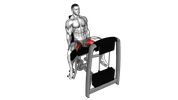
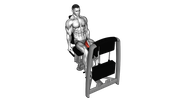
The Single Leg Seated Calf Machine Raise targets the calf muscles, specifically the gastrocnemius and soleus. This exercise is performed using a seated calf raise machine, allowing for isolated contraction of each calf muscle individually, enhancing muscle symmetry and balance.
How to Perform
- Adjust the seat height of the calf raise machine so that your knees are at a 90-degree angle when seated.
- Sit on the machine and place the ball of one foot on the platform, ensuring your heel is hanging off.
- Secure your thigh under the padded lever to stabilize your leg.
- Begin with your heel lowered below the platform to stretch the calf muscle.
- Push through the ball of your foot to raise your heel as high as possible, contracting your calf muscle.
- Pause briefly at the top of the movement for maximum contraction.
- Slowly lower your heel back to the starting position for a full stretch.
- Complete the desired number of repetitions before switching to the other leg.
What Muscles Work
Primary Muscle:
Tips
- Focus on a full range of motion to maximize muscle engagement.
- Keep your movements controlled and avoid bouncing at the bottom of the lift.
- Ensure your knee remains stable and does not move during the exercise.
- Exhale as you lift your heel and inhale as you lower it back down.
- Start with a lighter weight to master form before increasing resistance.
- Perform this exercise slowly to increase time under tension for better muscle growth.
Common Mistakes
- Not fully extending the ankle at the top of the movement, limiting calf activation.
- Allowing the heel to drop too low, causing strain on the Achilles tendon.
- Using momentum to lift the weight instead of controlled muscle contraction.
- Incorrect foot placement on the platform, leading to uneven force distribution.
- Failing to maintain a straight line from knee to ankle, causing knee misalignment.
- Not engaging the core, resulting in poor balance and stability.
- Allowing the knee to move excessively, reducing calf isolation.
- Using too much weight, compromising form and range of motion.
- Rushing through repetitions, preventing full muscle engagement.
Recommended Exercises
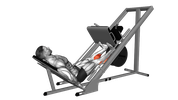
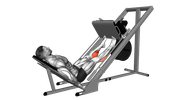
Explore exercises related to Single Leg Seated Calf Machine Raise for legs training and similar movement patterns.
Choose a workout plan or create your own - for free
Ready-made plans for every goal, a free plan creator, hundreds of exercises and an advanced workout journal - all in SmartWorkout.


Start with a free plan. Keep progressing with SmartWorkout.
- users
- 200k+
- exercises with technique guides
- 1,000+
- workouts on the free plan
- ∞