Dumbbell Incline T Raise
enums.exercise_tag.STRENGTHenums.exercise_tag.MOBILITYenums.exercise_tag.BALANCEenums.exercise_tag.FUNCTIONAL
exercise_detail.body_part: enums.body_part.SHOULDERS
exercise_detail.description
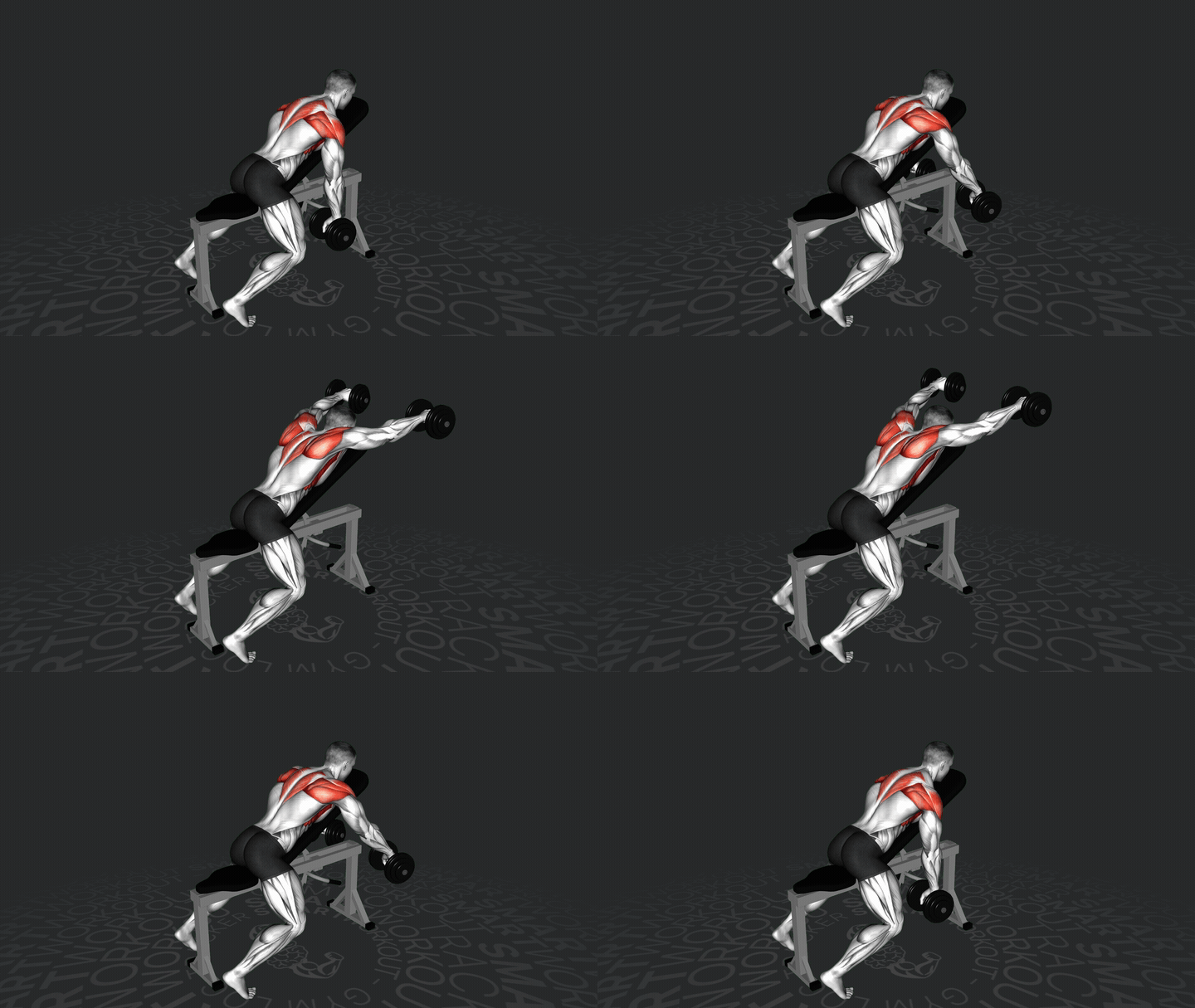
The Dumbbell Incline T Raise is an exercise targeting the upper back, specifically the rear deltoids, trapezius, and rhomboids. It involves lifting dumbbells while lying on an incline bench, forming a 'T' shape with your arms. This exercise helps improve posture and shoulder stability.
exercise_detail.how_to_perform
- Set an incline bench to a 30-45 degree angle.
- Lie face down on the bench with your chest supported and feet firmly on the ground.
- Hold a dumbbell in each hand with a neutral grip (palms facing each other).
- Extend your arms straight down towards the floor.
- Engage your core and keep your head in a neutral position.
- Raise your arms out to the sides until they are parallel to the floor, forming a 'T' shape.
- Squeeze your shoulder blades together at the top of the movement.
- Slowly lower the dumbbells back to the starting position.
- Repeat for the desired number of repetitions.
exercise_detail.what_muscles_work
exercise_detail.primary_muscle:
exercise_detail.secondary_muscles:
exercise_detail.tips
- Use light weights to maintain proper form and control throughout the exercise.
- Focus on squeezing your shoulder blades together as you lift the dumbbells.
- Keep your elbows slightly bent to reduce strain on the joints.
- Avoid using momentum; perform each repetition in a controlled manner.
- Maintain a neutral spine by keeping your head aligned with your torso.
- Breathe out as you lift the weights and inhale as you lower them.
exercise_detail.common_mistakes
- Lifting the dumbbells too high, causing shoulder impingement.
- Using momentum instead of controlled movement, reducing muscle engagement.
- Allowing the chest to lift off the bench, compromising stability.
- Arching the lower back excessively, leading to poor posture.
- Not maintaining a slight bend in the elbows, increasing joint strain.
- Failing to retract the shoulder blades, limiting upper back activation.
- Raising the arms too quickly, decreasing time under tension.
- Holding the dumbbells too close to the body, reducing range of motion.
- Neglecting to keep the neck in a neutral position, causing strain.
- Using weights that are too heavy, leading to form breakdown.
exercise_detail.recommended_exercises
exercise_detail.recommended_exercises_intro
exercise_detail.app_ad.title
exercise_detail.app_ad.description