One-Arm Dumbbell Lateral Raise
enums.exercise_tag.STRENGTHenums.exercise_tag.BALANCE
exercise_detail.body_part: enums.body_part.SHOULDERS
exercise_detail.description
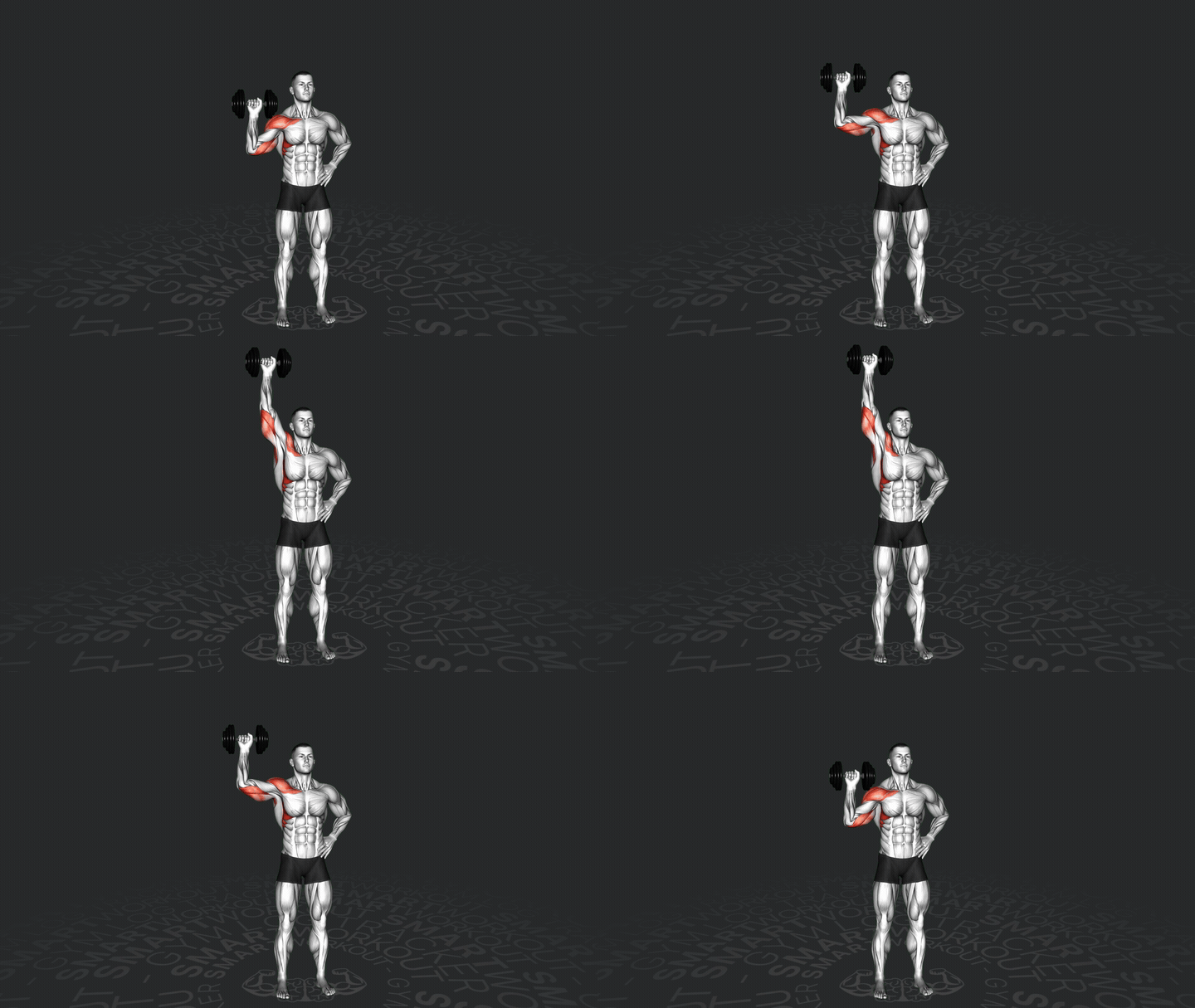
The One Arm Dumbbell Lateral Raise is an isolation exercise targeting the lateral deltoid muscle. It helps in building shoulder width and strength by lifting a dumbbell to the side of the body with one arm. This exercise is typically performed standing, allowing for greater range of motion and unilateral focus.
exercise_detail.how_to_perform
- Stand with your feet shoulder-width apart, holding a dumbbell in one hand with a neutral grip.
- Keep your core engaged and maintain a slight bend in your knees.
- Position your working arm slightly bent at the elbow, with the dumbbell resting against your outer thigh.
- Exhale as you raise the dumbbell to the side until your arm is parallel to the floor.
- Pause briefly at the top of the movement, ensuring your wrist is in line with your shoulder.
- Inhale as you slowly lower the dumbbell back to the starting position.
- Complete the desired number of repetitions before switching to the other arm.
exercise_detail.what_muscles_work
exercise_detail.primary_muscle:
exercise_detail.secondary_muscles:
exercise_detail.tips
- Focus on lifting with your shoulder, not your hand, to effectively target the lateral deltoid.
- Avoid using momentum; control the movement throughout for maximum muscle engagement.
- Keep your torso stationary and avoid leaning to either side during the lift.
- Start with a lighter weight to ensure proper form and gradually increase as you build strength.
- Maintain a slight bend in your elbow throughout the exercise to reduce strain on the joint.
- Perform this exercise in front of a mirror to monitor form and ensure balanced movement on both sides.
exercise_detail.common_mistakes
- Using too heavy a weight, leading to momentum-driven movement rather than controlled muscle engagement.
- Raising the dumbbell above shoulder height, which can cause unnecessary strain on the shoulder joint.
- Shrugging the shoulder during the lift, which shifts focus away from the lateral deltoid to the trapezius.
- Bending the elbow excessively, turning the exercise into a bicep curl rather than a lateral raise.
- Leaning the torso to the opposite side, which reduces the effectiveness of the lateral deltoid activation.
- Swinging the dumbbell instead of lifting it, resulting in poor muscle control and engagement.
- Failing to maintain a neutral wrist position, which can lead to wrist strain.
- Not keeping the core engaged, causing instability and potential lower back strain.
- Allowing the shoulder blade to protract excessively, reducing the isolation of the lateral deltoid.
exercise_detail.recommended_exercises
exercise_detail.recommended_exercises_intro
exercise_detail.app_ad.title
exercise_detail.app_ad.description