Pike Push-Up On Bench
StrengthPushBalance
Track Pike Push-Up On Bench in SmartWorkout and watch your numbers go up
Log sets, weights and progress for free, with no workout limits.


Body Part: Shoulders
Description
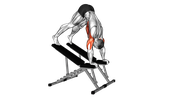
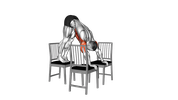
The Pike Push Up On Bench is a bodyweight exercise targeting the shoulders, triceps, and upper chest. It involves elevating the feet on a bench to increase the angle of the body, which shifts more emphasis onto the shoulders compared to a standard push-up.
How to Perform
- Begin by positioning yourself in front of a bench. Place your feet on the bench and your hands on the floor, shoulder-width apart.
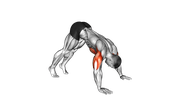
- Walk your hands back towards the bench until your body forms an inverted V shape, with your hips elevated and head pointing downwards.
- Keep your legs straight and core engaged throughout the movement.
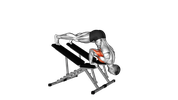
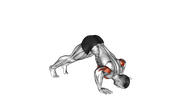
- Lower your head towards the floor by bending your elbows, keeping them slightly flared out.
- Pause briefly when your head is close to the floor, then push through your palms to extend your arms and return to the starting position.
- Repeat for the desired number of repetitions.
What Muscles Work
Primary Muscle:
Secondary Muscles:
Tips
- Ensure that your hands are placed firmly on the ground to maintain stability.
- Focus on keeping your core tight to prevent sagging or arching of the back.
- Control the movement by lowering slowly and pushing up with steady force.
- Keep your elbows at a slight angle rather than flaring them directly out to reduce strain on the joints.
- Adjust the height of the bench if needed to modify difficulty; a higher bench increases difficulty by shifting more weight onto the shoulders.
- Breathing is crucial: inhale as you lower down and exhale as you push up.
Common Mistakes
- Hands placed too wide, reducing shoulder engagement.
- Elbows flaring out excessively, increasing shoulder strain.
- Hips not elevated high enough, decreasing emphasis on shoulders.
- Head looking forward instead of down, causing neck strain.
- Feet positioned too far from the bench, reducing leverage and control.
- Lowering body too quickly, leading to poor control and form.
- Failing to engage core, causing instability and lower back strain.
- Not achieving full range of motion, limiting shoulder activation.
- Allowing shoulders to shrug, reducing effectiveness and increasing tension.
Recommended Exercises
Explore exercises related to Pike Push-Up On Bench for shoulders training and similar movement patterns.



Choose a workout plan or create your own - for free
Ready-made plans for every goal, a free plan creator, hundreds of exercises and an advanced workout journal - all in SmartWorkout.