Dips
enums.exercise_tag.STRENGTHenums.exercise_tag.PUSH
exercise_detail.body_part: enums.body_part.TRICEPS
exercise_detail.description
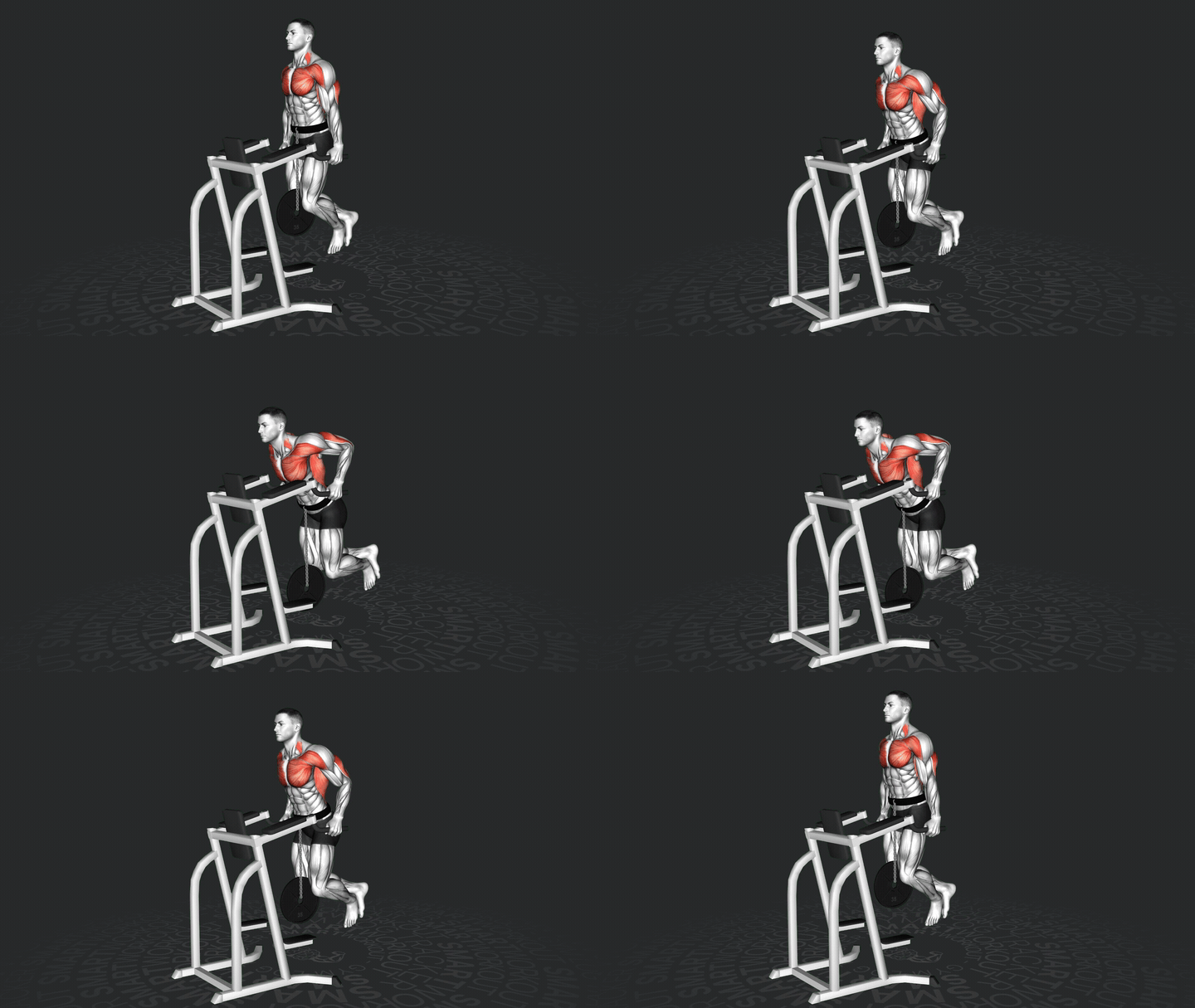
Dips are a compound upper body exercise that primarily targets the triceps, chest, and shoulders. They are performed using parallel bars or a dip station, where the body is lowered and raised using the arms.
exercise_detail.how_to_perform
- Start by gripping the parallel bars with your palms facing inward and arms fully extended.
- Lift your body off the ground by straightening your arms and keeping your legs crossed behind you.
- Inhale as you slowly lower your body by bending your elbows until they reach a 90-degree angle or slightly less.
- Keep your torso upright and elbows close to your body to focus on the triceps.
- Exhale as you push yourself back up to the starting position by extending your arms.
- Repeat for the desired number of repetitions.
exercise_detail.what_muscles_work
exercise_detail.primary_muscle:
exercise_detail.secondary_muscles:
exercise_detail.tips
- Ensure that your shoulders are down and away from your ears to prevent strain.
- Maintain a controlled movement throughout the exercise to maximize muscle engagement.
- Avoid swinging or using momentum to lift yourself; focus on using arm strength.
- If you're new to dips, consider using an assisted dip machine or resistance bands for support.
- Keep your core engaged to stabilize your body during the movement.
- To increase difficulty, add weight using a dip belt or weighted vest.
exercise_detail.common_mistakes
- Leaning too far forward, which shifts focus away from triceps to shoulders.
- Flaring elbows out excessively, increasing shoulder strain.
- Lowering too deeply, which can lead to shoulder joint stress.
- Failing to keep the core engaged, resulting in a loss of stability.
- Using momentum to push back up, reducing muscle engagement.
- Allowing shoulders to shrug, which can lead to neck tension.
- Not maintaining a straight torso, causing inefficient movement.
- Hands positioned too wide, decreasing triceps activation.
exercise_detail.recommended_exercises
exercise_detail.recommended_exercises_intro
exercise_detail.app_ad.title
exercise_detail.app_ad.description