Cable Twist (up down)
CoreFunctional
Track this exercise in SmartWorkout
Log sets, weights and progress for free, with no workout limits.


Body Part: Abs
Description
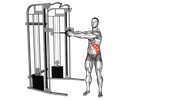
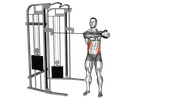
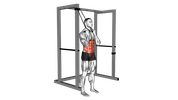
The Cable Twist (up down) is a core-strengthening exercise that targets the obliques and transverse abdominis. It involves rotational movement using a cable machine, enhancing stability and improving rotational power.
How to Perform
- Set the cable machine to a high pulley position and attach a single handle.
- Stand with feet shoulder-width apart, side-on to the machine, and grasp the handle with both hands.
- Engage your core and slightly bend your knees for stability.
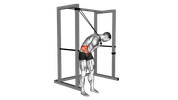
- Pull the handle downward across your body in a controlled motion, rotating your torso as you do so.
- Continue the movement until your hands are near your opposite hip.
- Slowly return to the starting position by reversing the motion, maintaining control throughout.
- Complete the desired number of repetitions before switching sides.
What Muscles Work
Primary Muscle:
Secondary Muscles:
Tips
- Keep your core engaged throughout the exercise to maximize effectiveness and protect your lower back.
- Focus on slow, controlled movements rather than using momentum to ensure proper muscle engagement.
- Maintain a slight bend in your knees to stabilize your stance and prevent unnecessary strain.
- Exhale as you pull the cable downwards and inhale as you return to the starting position.
- Ensure that your shoulders remain relaxed and avoid shrugging them during the movement.
Common Mistakes
- Rotating the hips instead of isolating the torso, reducing core engagement.
- Allowing the cable to pull the arms uncontrollably, leading to loss of tension.
- Standing too far from the cable machine, causing overextension and strain.
- Using too much weight, compromising form and control.
- Leaning forward or backward, disrupting balance and stability.
- Not maintaining a neutral spine, increasing lower back strain.
- Failing to engage the obliques, relying on arm strength instead.
- Executing the movement too quickly, reducing muscle activation.
- Neglecting to keep the shoulders down and relaxed, causing unnecessary tension.
Recommended Exercises
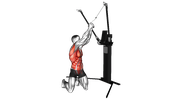
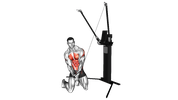
Explore exercises related to Cable Twist (up down) for abs training and similar movement patterns.
Choose a workout plan or create your own - for free
Ready-made plans for every goal, a free plan creator, hundreds of exercises and an advanced workout journal - all in SmartWorkout.