Seated Ab Cable Crunch
Also known as: Seated Cable Crunch, Seated Abdominal Cable Crunch, Seated Rope Crunch
Track Seated Ab Cable Crunch in SmartWorkout and watch your numbers go up
Log sets, weights and progress for free, with no workout limits.


Description
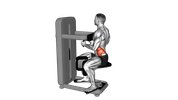
Sit on a flat bench with your back to a high pulley, hold a rope at your temples and curl your chest down to your thighs to train your abs with weight. Almost all the work goes to the six-pack muscle (rectus abdominis), and you'll feel it most above the navel; the obliques chip in only a little. Unlike the kneeling cable crunch, you face away from the stack and your hips stay planted on the bench, so they can't sit back and help. Choose it when kneeling bothers your knees or your hips keep drifting in the kneeling version; go kneeling when you want more load.
How to Perform
- Clip a triceps rope to the high pulley of a cable column or lat-pulldown station. Go light at first; sitting down with the rope takes practice.
- Put a flat bench in front of the column. Take the rope while standing, then sit down with your back to the stack.
- Hold one rope end in each hand at your temples, palms facing each other and elbows pointing forward. The rope runs behind your head.
- Sit tall near the front edge of the bench, feet flat and hip-width apart, knees at about 90°. The plates should already be lifted.
- Breathe out and curl: pull your ribs toward your pelvis, tuck your chin and round your back from the top down.
- Curl until your chest rests on your thighs and your elbows reach your knees. Squeeze for a second, fists still at your temples.
- Uncurl over 2–3 seconds and stop the moment you sit tall. Start the next rep before the plates touch down.
- To finish, sit tall and let your hands rise slowly toward the pulley until the weight rests. Then let go of the rope.
What Muscles Work
Primary Muscle:
Tips
- Sets of 10–20 reps suit this lift, usually 2–4 of them taken close to failure.
- Pick a range such as 12–15 and add reps at the same weight until you get 15 in all sets with a full curl and a one-second squeeze. Then add one plate, usually 2.5–5 kg, and go back to 12. Pulley ratios differ, so compare loads only on the same station.
- Your stomach should work hard down the front, strongest above the navel and at the bottom of each rep. Tired arms or shoulders mean the rope is doing the pulling; a pull at the front of the hips means you're tipping forward with a flat back.
- New to loaded crunches? Learn the curl on the floor with Abdominal Crunches first. Once this version feels easy, slow the return to 3–4 seconds and hold the bottom for 2 before you add a plate.
- Rounding your back under load is the whole point here. If it brings on back pain, or pain running into a leg, stop and switch to a plank-type exercise.
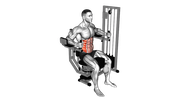
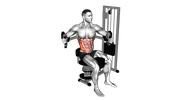
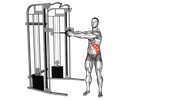
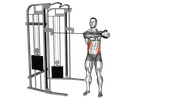
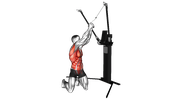
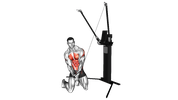
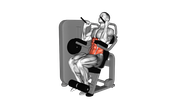
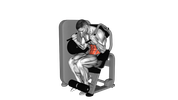
- Substitutes: Kneeling Cable Abs Crunches (same curl, heavier loads), Machine Abdominal Crunches (fixed path, nothing to set up), Standing Cable Ab Crunch (no bench needed) and Weighted Ab Crunches (just a plate and a mat).
Common Mistakes
- Bench in the wrong spot. Too far out and the cable pulls you backward; right under the pulley and the rope drags up your neck. Move it until the cable hangs just behind your head and the weight stays up while you sit tall.
- Pulling the rope down with your arms so your hands leave your head. Pin your fists to your temples, and drop the weight if your arms keep taking over.
- Tipping forward from the hips with a flat back, so you feel it at the front of the hips instead of your stomach. Think "ribs to pelvis" and round from the upper back first.
- Yanking your head down with your chin. Let your head follow your upper back as it rounds, hands at your temples and never on your neck.
- Letting the stack snap you upright and leaning back past vertical with an arched lower back. Take 2–3 seconds on the way up and stop when you're sitting tall.
Recommended Exercises
Explore exercises related to Seated Ab Cable Crunch for abs training and similar movement patterns.

Choose a workout plan or create your own - for free
Ready-made plans for every goal, a free plan creator, hundreds of exercises and an advanced workout journal - all in SmartWorkout.