Back Lever
enums.exercise_tag.STRENGTHenums.exercise_tag.COREenums.exercise_tag.ISOMETRICenums.exercise_tag.BALANCE
exercise_detail.body_part: enums.body_part.BACK
exercise_detail.description
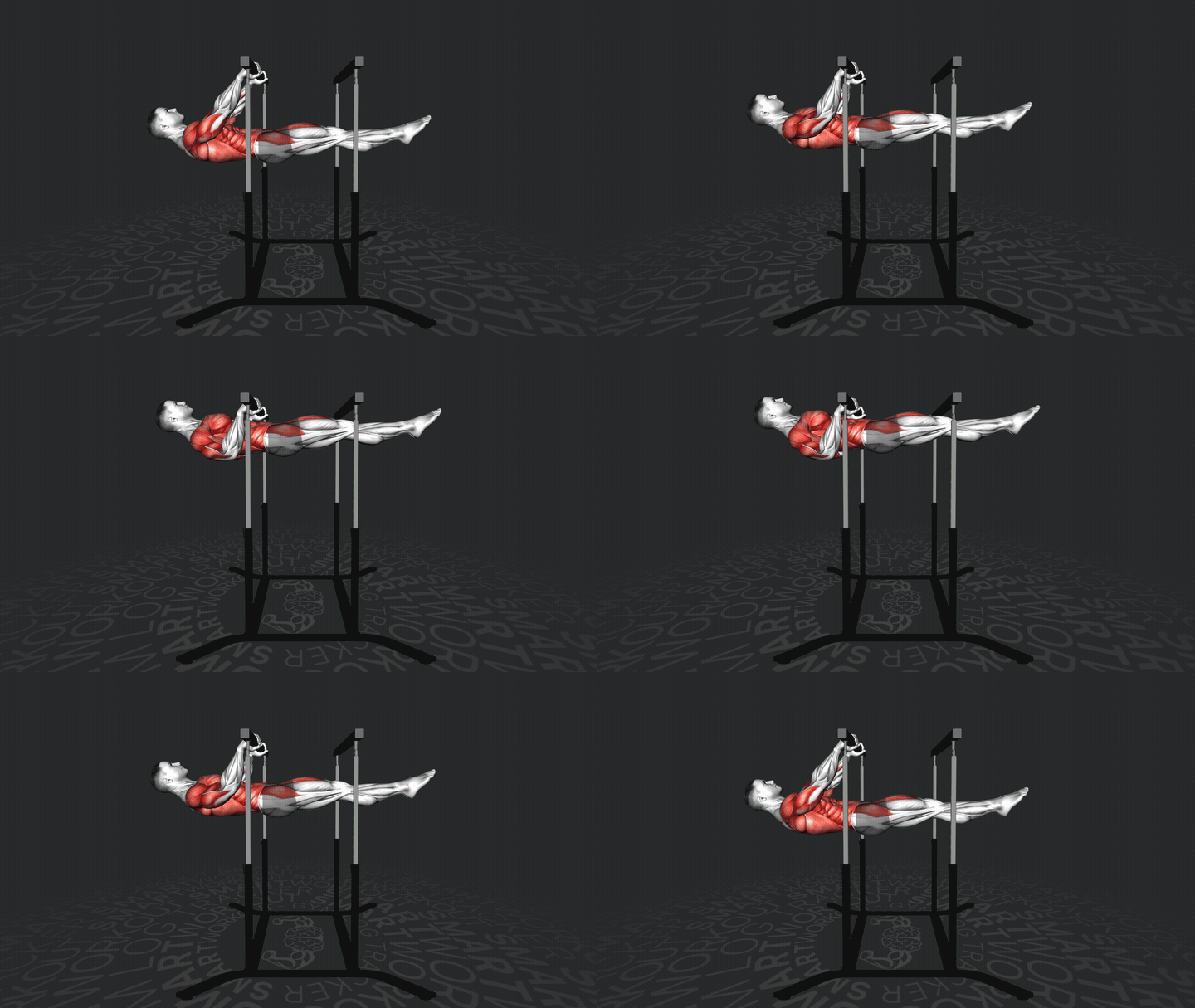
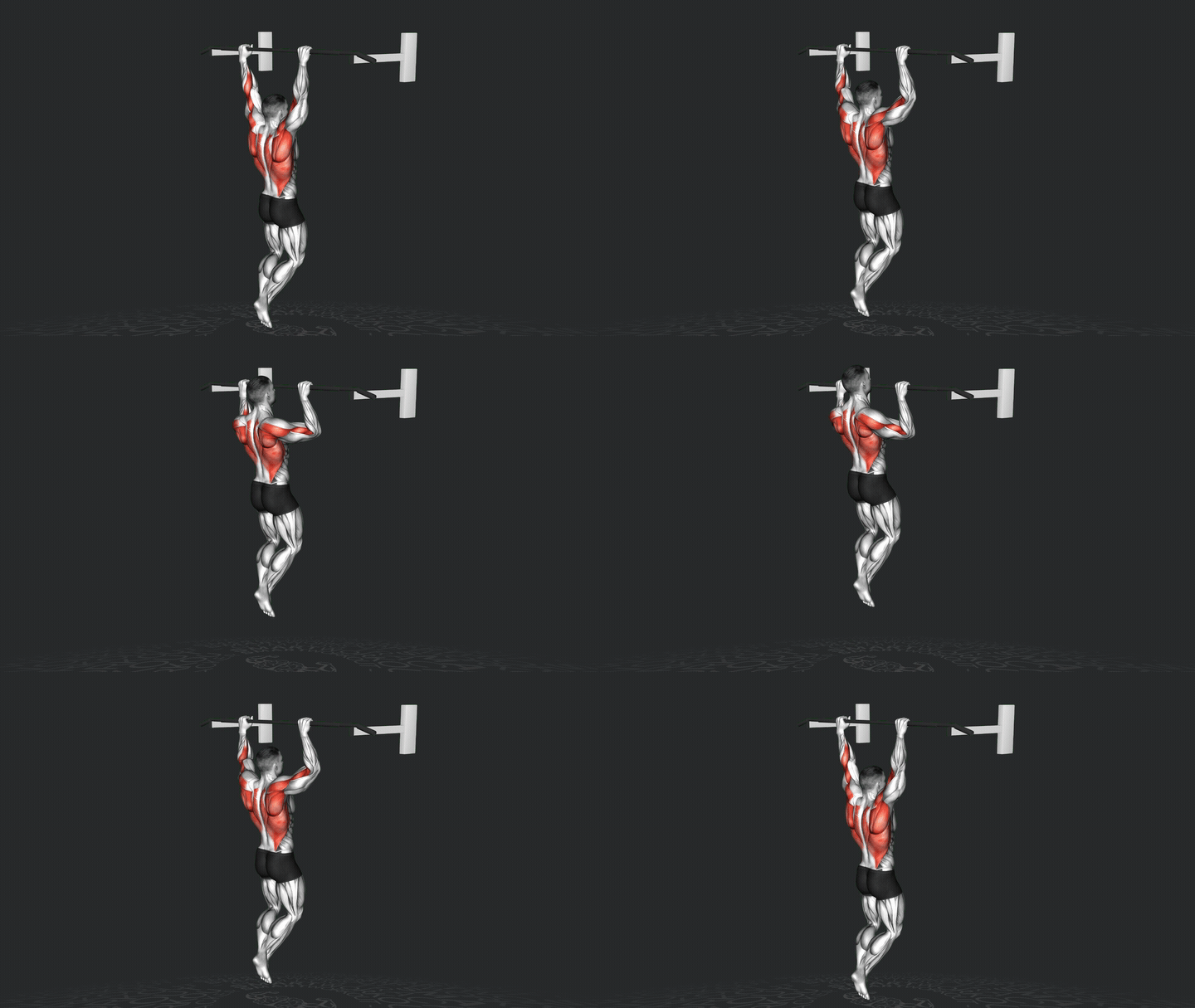
The Back Lever is an advanced calisthenics exercise that requires significant strength, balance, and flexibility. It involves holding the body horizontally facing downwards while hanging from a bar or rings, with the arms extended and the body in a straight line.
exercise_detail.how_to_perform
- Begin by hanging from a bar or gymnastic rings with a pronated grip (palms facing away).
- Engage your core and glutes to maintain a straight body position.
- Slowly tuck your knees to your chest to transition into an inverted hang.
- Extend your legs back and downwards while keeping your body straight, aiming to achieve a horizontal position.
- Hold the position as long as possible, maintaining tension throughout your entire body.
- To exit, tuck your knees back to your chest and return to the starting hang position.
exercise_detail.what_muscles_work
exercise_detail.primary_muscle:
exercise_detail.secondary_muscles:
exercise_detail.tips
- Ensure your shoulders are engaged and depressed to protect them from strain.
- Focus on keeping your body rigid by squeezing your glutes and engaging your core.
- Practice with tucked legs initially to build strength before attempting the full extension.
- Use parallel bars or rings for easier wrist positioning if experiencing discomfort on a straight bar.
- Gradually increase hold time as you build strength and confidence in the position.
- Incorporate exercises like skin-the-cat and front lever progressions to improve overall control and strength.
exercise_detail.common_mistakes
- Arching the back excessively, leading to loss of core engagement.
- Allowing the shoulders to elevate, reducing scapular stability.
- Bending the elbows, which shifts load away from the back muscles.
- Failing to maintain a straight body line, causing misalignment.
- Rushing into the position without proper progression, risking muscle strain.
- Neglecting to engage the glutes and hamstrings, diminishing lower body support.
- Letting the head drop, which disrupts neck alignment and balance.
- Losing tension in the core, resulting in sagging hips.
exercise_detail.recommended_exercises
exercise_detail.recommended_exercises_intro
exercise_detail.app_ad.title
exercise_detail.app_ad.description