Dumbbell Bent Over Row
Also known as: One-arm dumbbell row, Single-arm dumbbell row, Bench-supported one-arm dumbbell row
Track Dumbbell Bent Over Row in SmartWorkout and watch your numbers go up
Log sets, weights and progress for free, with no workout limits.


Description
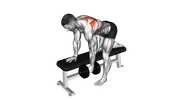
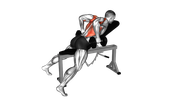
With one knee and hand on a flat bench, row a dumbbell with one arm from a straight-arm hang to your hip to build your lats and upper back. Most of the work lands on your lats and teres major below the armpit, the rotator cuff on the back of the shoulder blade and the lower traps, which pull the blade down and back; your middle traps, rear delt and forearm help. The bench holds your torso, so your lower back stays out of it and you can row a heavy dumbbell. Pick it over the standing two-dumbbell row when your lower back tires first or one side lags behind.
How to Perform
- Set a dumbbell beside the front half of a flat bench, on the side you'll train. Any sturdy support at knee height works too.
- For a right-arm set, put your left knee and shin on the bench and your left hand flat ahead of the knee, arm straight under your shoulder.
- Plant your right foot a little back and out to the side, knee soft. Flat back, torso about parallel to the floor, eyes on the floor just past the bench.
- Pick up the dumbbell with your palm facing the bench, fingers hooked around the handle and wrist straight. Let the arm hang under your shoulder, shoulder blade drifting forward.
- Pull the shoulder blade toward your spine first, then drive your elbow up and back toward your hip, upper arm brushing your side.
- Stop with the dumbbell beside your hip and the elbow just above your back. Hold a second, then lower in about 2 seconds to a full hang.
- Finish all reps on this side and set the dumbbell down, then swap knee, hand and arm for the same number on the other side.
What Muscles Work
Primary Muscle:
Secondary Muscles:
Tips
- Work with 8–12 reps per side for muscle and 5–8 for strength, over 3–4 sets. Stay with one dumbbell until both sides reach the top number in all sets with a full hang, a one-second hold and no twisting. Then take the next dumbbell, usually 2–2.5 kg heavier, and build the reps back up from the bottom.
- You should feel it along the side of your back under the armpit and around the shoulder blade, while the support arm and your abs work to keep you still. If your lower back starts doing the work, your support hand has probably drifted away from under your shoulder. On heavy sets, your grip often gives out before your back does.
- Substitutes: Dumbbell Neutral Grip Incline Bench Row if you can't stop your torso from twisting, Bent Over Kettlebell Row when there's no bench (free hand on your front knee), Double Dumbbell Bent Over Row to train both sides at once, and One-Arm Cable Row for the steady pull of a low pulley.
Common Mistakes
- Twisting to heave the dumbbell up: the working shoulder rolls toward the ceiling and the hip opens. Keep both shoulders and hips square to the floor, press the support hand into the bench and go lighter if you still turn.
- Rowing to your chest with the elbow flared out wide. That's a rear-delt row; here the elbow drives toward your hip and the dumbbell finishes beside your lower ribs.
- Stopping the dumbbell halfway down. At the bottom of every rep, let the arm hang straight and the shoulder blade spread before you pull again.
Workout plans with this exercise
Recommended Exercises
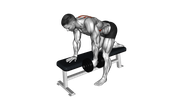
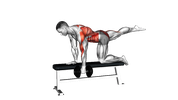
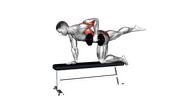
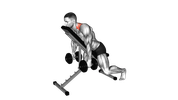
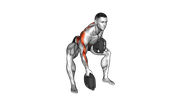
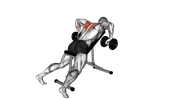
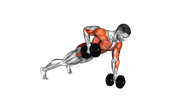
Explore exercises related to Dumbbell Bent Over Row for back training and similar movement patterns.






Choose a workout plan or create your own for free
Ready-made plans for every goal, a free plan creator, hundreds of exercises and an advanced workout journal: all in SmartWorkout.