Dumbbell Biceps Curl
Also known as: Dumbbell Curl, Dumbbell Bicep Curl, Standing Dumbbell Curl
Track Dumbbell Biceps Curl in SmartWorkout and watch your numbers go up
Log sets, weights and progress for free, with no workout limits.


Description
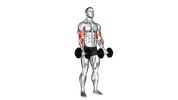
Stand tall with a dumbbell in each hand, palms forward, and curl both weights up to your shoulders: the classic way to build bigger, stronger biceps. Both heads of the biceps on the front of your upper arm do most of the work, helped by the brachioradialis on the thumb side of your forearm and the grip muscles holding the handles. Each arm lifts its own dumbbell, so your stronger side can't cover for the weaker one, and one pair of dumbbells is all the kit you need. Pick it over a barbell curl when a straight bar bothers your wrists or elbows.
How to Perform
- Stand with your feet about hip-width apart and your knees straight but soft, a dumbbell in each hand and your arms hanging at your sides.
- Turn your palms to face forward and hold each handle in the middle, knuckles in line with your forearm.
- Set your shoulders down and back, stack your ribs over your hips and lightly tense your abs and glutes. Your elbows rest against your sides.
- Breathe out and bend both elbows at the same time, bringing the dumbbells up in an arc toward the front of your shoulders. Only your forearms move.
- Stop when your forearms are close to vertical and the dumbbells reach shoulder height, palms facing your shoulders. Squeeze there for about a second.
- Lower both dumbbells along the same arc in 2–3 seconds until your elbows are completely straight, then curl again without a bounce. Set them down only after the last slow lowering.
What Muscles Work
Primary Muscle:
Secondary Muscles:
Tips
- Curl 8–15 reps, or 6–10 on heavier days. Add reps at the same dumbbells until all sets hit the top number, then take the next pair (usually 1–2 kg more per hand) and go back to the bottom. On light dumbbells that step is a 10–20% jump, so expect several sessions at each weight.
- The front of your upper arm works hardest as your forearms pass horizontal and in the squeeze at the top, plus some work along the thumb side of your forearm. If your lower back or the front of your shoulders starts doing the lifting, the dumbbells are too heavy.
- Can't stop the swing? Switch to the Seated Dumbbell Curl with your back against an upright bench. For a harder version, stretch the lowering to 3–4 seconds or move on to the Seated Incline Biceps Curl, where the biceps starts from a longer stretch.
- Substitutes: Alternate Biceps Curl (one arm at a time), Barbell Biceps Curl (more total weight), EZ-Bar Biceps Curl (easier on the wrists) and Bar Cable Biceps Curl (steady pull at the bottom).
Common Mistakes
- Leaning back and throwing the dumbbells up with your hips. Go lighter, brace your abs and glutes and keep your knees still. If the swing keeps creeping in, do the set with your back against a wall.
- Elbows sliding forward and up at the top so your shoulders lift the weight. Keep the elbows beside your ribs and stop at shoulder height, not at your chin.
- Half reps at the bottom, or dumbbells that drop the last part of the way. Lower for 2–3 seconds until your elbows are fully straight; heavy dumbbells snapping into a locked elbow yank on the biceps tendon.
- Palms turning in toward a hammer grip as the dumbbells rise. Keep them facing forward at the bottom and toward your shoulders at the top; think "pinky slightly up".
Workout plans with this exercise
- Full body · 2 days
- Full body · 2 days
- Full body · 3 days
- Full body · 3 days
- Upper/Lower · 3 days
- Upper/Lower · 4 days
- Upper/Lower · 4 days
- Push/Pull · 4 days
- PPL · 3 days
- PPL · 3 days
- PPL · 6 days
- PPL + Upper/Lower · 5 days
- Body part split · 3 days
- Body part split · 4 days
- Body part split · 5 days
- Full body · 3 days · Dumbbells
- Upper/Lower · 4 days · Dumbbells
- Upper/Lower · 4 days · Glutes
- Upper/Lower · 3 days · Glutes
- Push/Pull/Legs + Arms · 4 days
- Upper/Lower · 4 days · Chest
- Upper/Lower · 4 days · V-taper
Recommended Exercises
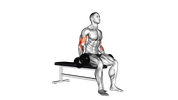
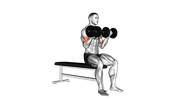
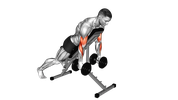
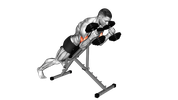
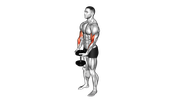
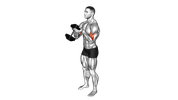
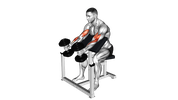
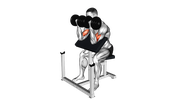
Explore exercises related to Dumbbell Biceps Curl for biceps training and similar movement patterns.
Choose a workout plan or create your own for free
Ready-made plans for every goal, a free plan creator, hundreds of exercises and an advanced workout journal: all in SmartWorkout.
Start with a free plan. Keep progressing with SmartWorkout.
- users
- 200k+
- exercises with technique guides
- 1,000+
- workouts on the free plan
- ∞