Rope Cable Hammer Curl
enums.exercise_tag.STRENGTHenums.exercise_tag.PULL
exercise_detail.body_part: enums.body_part.BICEPS
exercise_detail.description
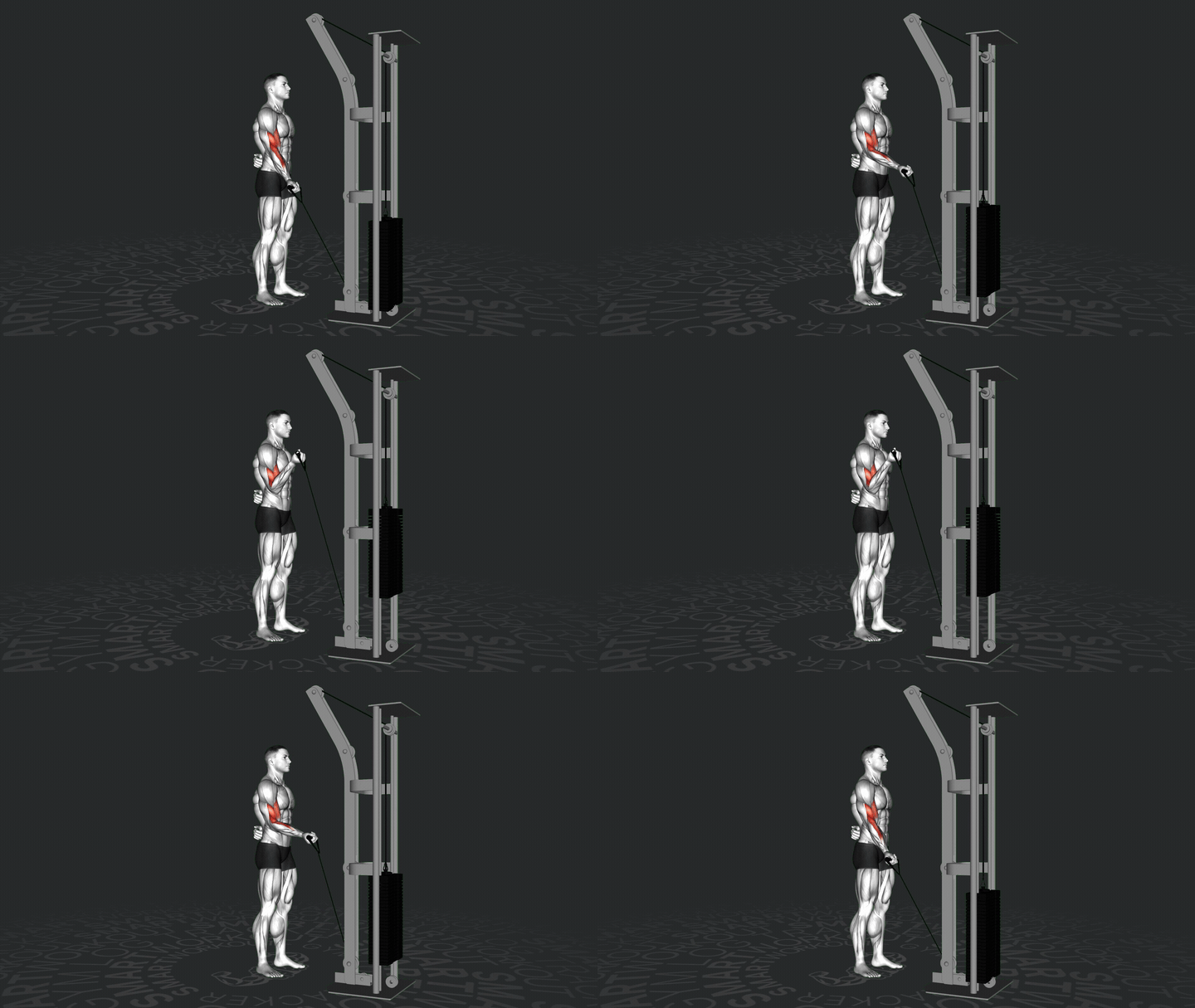
The Rope Cable Hammer Curl is an isolation exercise targeting the brachialis, brachioradialis, and biceps brachii muscles. It utilizes a rope attachment on a cable machine to provide constant tension throughout the movement, enhancing muscle engagement and growth.
exercise_detail.how_to_perform
- Attach a rope handle to the low pulley of a cable machine.
- Stand facing the machine with feet shoulder-width apart.
- Grasp the rope with a neutral grip (palms facing each other).
- Keep your elbows close to your torso and your back straight.
- Exhale as you curl the rope upwards by flexing your elbows.
- Continue curling until your forearms are vertical or slightly past vertical.
- Squeeze your biceps at the top of the movement.
- Inhale as you slowly lower the rope back to the starting position.
- Repeat for the desired number of repetitions.
exercise_detail.what_muscles_work
exercise_detail.primary_muscle:
exercise_detail.secondary_muscles:
exercise_detail.tips
- Maintain a controlled motion to maximize muscle tension.
- Avoid swinging your body or using momentum to lift the weight.
- Focus on keeping your elbows stationary throughout the exercise.
- Engage your core to stabilize your body during the movement.
- Experiment with different rope lengths to find what feels most comfortable.
- Perform the exercise slowly to increase time under tension for better results.
- Ensure full range of motion by fully extending and contracting your arms.
exercise_detail.recommended_exercises
exercise_detail.recommended_exercises_intro
exercise_detail.app_ad.title
exercise_detail.app_ad.description