Dumbbell Deep Push Up
StrengthPush
Track this exercise in SmartWorkout
Log sets, weights and progress for free, with no workout limits.


Body Part: Chest
Description
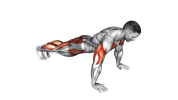
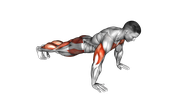
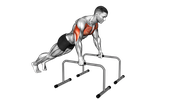
The Dumbbell Deep Push Up is an advanced variation of the traditional push-up that involves using dumbbells to increase the range of motion and engage the chest, shoulders, and triceps more intensely. This exercise enhances upper body strength, stability, and muscle definition.
How to Perform
- Begin by placing two dumbbells on the floor shoulder-width apart. Ensure they are stable and won't roll.
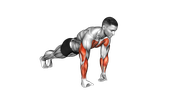
- Grip the dumbbells firmly and position yourself in a high plank position with your arms extended, keeping your body in a straight line from head to heels.
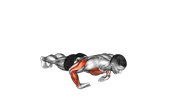
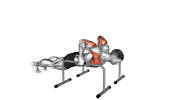
- Engage your core and lower your body by bending your elbows, allowing your chest to descend between the dumbbells.
- Lower yourself until your chest is slightly below the level of the dumbbells to maximize range of motion.
- Pause briefly at the bottom, then push through your palms to return to the starting position.
- Repeat for the desired number of repetitions, maintaining control throughout the movement.
What Muscles Work
Primary Muscle:
Secondary Muscles:
Tips
- Keep your elbows at a 45-degree angle relative to your torso to protect your shoulders.
- Maintain a neutral spine by keeping your head aligned with your spine throughout the exercise.
- Focus on squeezing your chest muscles as you push back up to enhance muscle engagement.
- Ensure that the dumbbells are stable and placed on a non-slip surface to prevent injury.
- Start with lighter weights if you're new to this exercise to master the form before progressing.
Common Mistakes
- Hands placed too wide or too narrow, affecting shoulder engagement and stability.
- Elbows flaring out excessively, leading to shoulder strain.
- Hips sagging or piking, compromising core engagement.
- Inadequate depth, reducing chest and tricep activation.
- Rushing the movement, causing loss of control and form.
- Failing to maintain a neutral spine, increasing lower back stress.
- Not gripping the dumbbells firmly, risking wrist instability.
- Allowing shoulders to collapse, decreasing scapular stability.
- Neglecting to engage the core, leading to improper alignment.
- Uneven weight distribution, causing imbalance and improper muscle activation.
Recommended Exercises
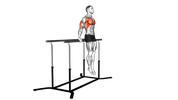
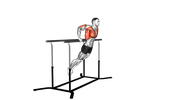
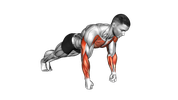
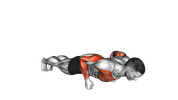
Explore exercises related to Dumbbell Deep Push Up for chest training and similar movement patterns.

Choose a workout plan or create your own - for free
Ready-made plans for every goal, a free plan creator, hundreds of exercises and an advanced workout journal - all in SmartWorkout.