Negative Push-Up
StrengthPush
Track this exercise in SmartWorkout
Log sets, weights and progress for free, with no workout limits.


Body Part: Chest
Description
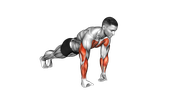
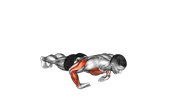
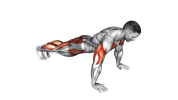
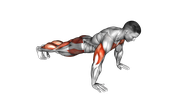
Negative push-ups focus on the eccentric phase of the push-up, where you lower your body slowly to the ground. This exercise helps build strength and control, particularly in the chest, triceps, and shoulders, by emphasizing muscle tension during the lowering phase.
How to Perform
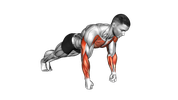
- Start in a standard push-up position with your hands shoulder-width apart and your body in a straight line from head to heels.
- Engage your core and keep your elbows slightly tucked in towards your body.
- Slowly lower your body towards the ground over a count of 3 to 5 seconds, maintaining control throughout the movement.
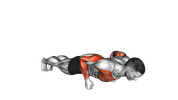
- Once your chest is close to the ground, either push back up to the starting position or gently rest on the floor before resetting.
- Repeat for the desired number of repetitions.
What Muscles Work
Primary Muscle:
Secondary Muscles:
Tips
- Focus on maintaining a straight line from head to heels; avoid sagging hips or arching your back.
- Control is key; ensure you lower yourself slowly and steadily to maximize muscle engagement.
- Keep your core engaged throughout the movement to maintain stability and protect your lower back.
- If you're unable to push back up, use your knees to assist or reset by returning to the starting position after each rep.
- Incorporate negative push-ups into your routine to improve overall push-up strength and endurance.
Common Mistakes
- Allowing the elbows to flare out excessively, putting strain on the shoulders.
- Dropping the hips, leading to a sagging lower back and poor core engagement.
- Failing to maintain a straight line from head to heels, compromising form.
- Descending too quickly, reducing muscle tension and control.
- Not lowering the chest close enough to the ground, limiting range of motion.
- Neglecting to engage the core, resulting in instability.
- Placing hands too far forward or back, affecting shoulder and wrist alignment.
- Allowing the head to drop, causing neck strain.
Recommended Exercises
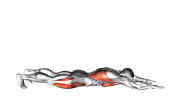
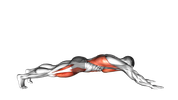
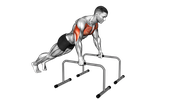
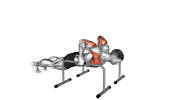
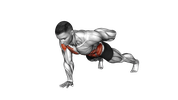
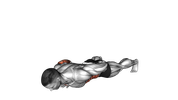
Explore exercises related to Negative Push-Up for chest training and similar movement patterns.
Choose a workout plan or create your own - for free
Ready-made plans for every goal, a free plan creator, hundreds of exercises and an advanced workout journal - all in SmartWorkout.