Barbell Rack Pull
enums.exercise_tag.STRENGTHenums.exercise_tag.PULL
exercise_detail.body_part: enums.body_part.LEGS
exercise_detail.description
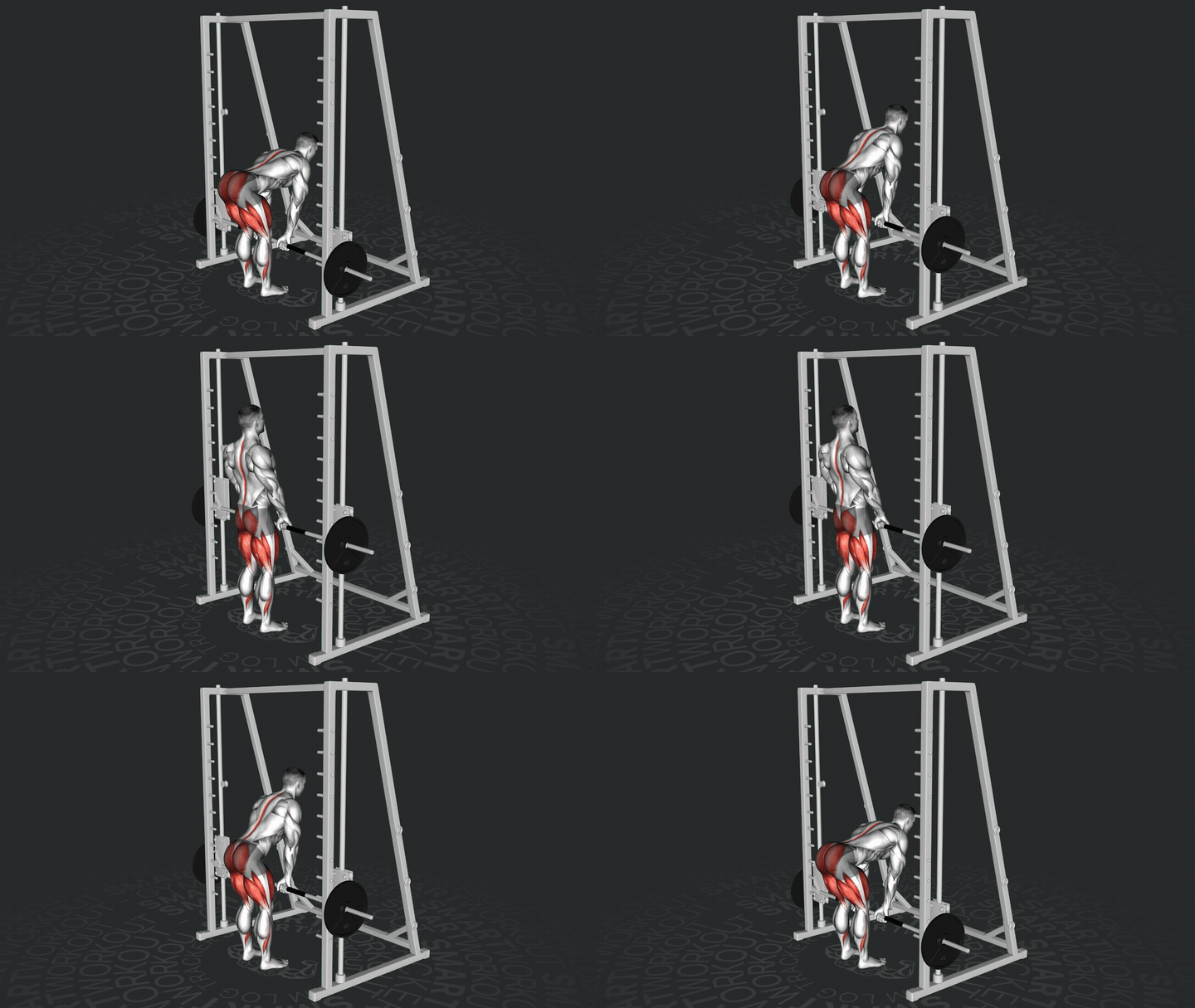
The Barbell Rack Pull is a compound exercise that primarily targets the lower back, glutes, and hamstrings. It is a partial deadlift performed from a rack or blocks, allowing for a shorter range of motion. This exercise is beneficial for increasing strength in the lockout phase of the deadlift and improving overall pulling power.
exercise_detail.how_to_perform
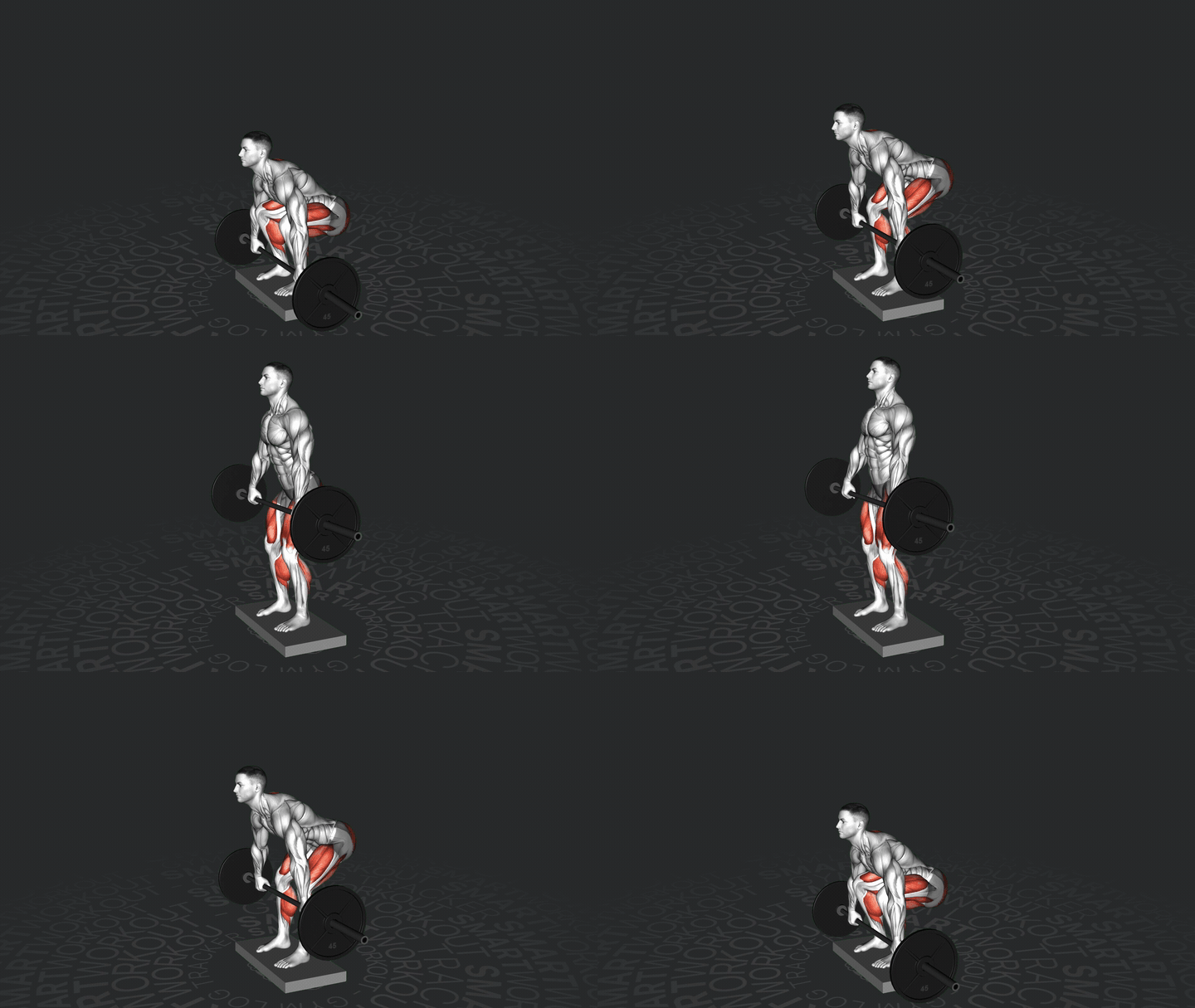
- Set up a barbell on a power rack or blocks at knee height or slightly below.
- Stand with your feet shoulder-width apart and position the barbell over the mid-foot.
- Grip the barbell with an overhand or mixed grip, slightly wider than shoulder-width.
- Engage your core and keep your back straight as you hinge at the hips to lower your torso.
- Lift the barbell by extending your hips and knees simultaneously, keeping the bar close to your body.
- Stand fully upright with your shoulders back and chest up at the top of the movement.
- Lower the barbell back to the starting position in a controlled manner.
exercise_detail.what_muscles_work
exercise_detail.primary_muscle:
exercise_detail.secondary_muscles:
exercise_detail.tips
- Ensure your back remains straight throughout the lift to avoid injury.
- Focus on driving through your heels to maximize power and stability.
- Keep the barbell close to your body to maintain proper leverage and control.
- Use wrist straps if grip strength is a limiting factor during heavy lifts.
- Start with lighter weights to perfect form before progressing to heavier loads.
- Maintain a neutral head position by looking forward or slightly down.
exercise_detail.common_mistakes
- Starting with the hips too low, resembling a squat position, reducing hamstring and glute engagement.
- Placing the barbell too high on the rack, limiting range of motion and effectiveness.
- Rounding the back, increasing risk of spinal injury due to improper load distribution.
- Using an overextended grip, causing shoulder strain and reducing control.
- Pulling with the arms instead of driving through the hips, disengaging larger muscle groups.
- Locking out the knees too early, shifting stress to the lower back.
- Leaning too far back at the top of the movement, risking hyperextension of the spine.
- Failing to maintain a neutral spine, compromising core stability.
- Descending too quickly, losing control and risking form breakdown.
- Allowing the bar to drift away from the body, increasing lower back strain.
exercise_detail.recommended_exercises
exercise_detail.recommended_exercises_intro
exercise_detail.app_ad.title
exercise_detail.app_ad.description