Dumbbell Romanian Deadlift
enums.exercise_tag.STRENGTHenums.exercise_tag.PULL
exercise_detail.body_part: enums.body_part.LEGS
exercise_detail.description
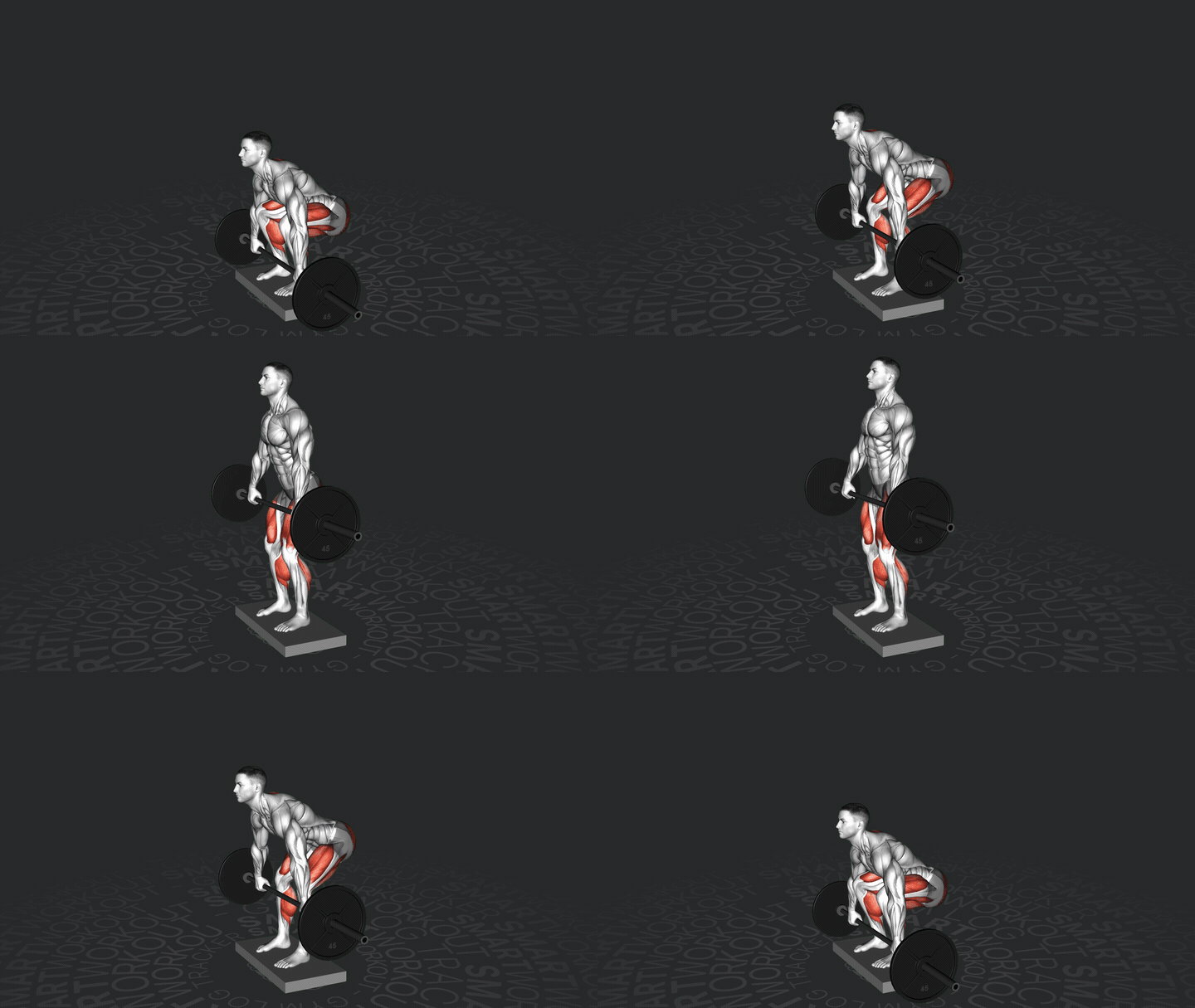
The Dumbbell Romanian Deadlift is a strength training exercise targeting the posterior chain, including the hamstrings, glutes, and lower back. It involves hinging at the hips while maintaining a neutral spine to lift and lower dumbbells, emphasizing control and muscle engagement.
exercise_detail.how_to_perform
- Stand with feet hip-width apart, holding a dumbbell in each hand with an overhand grip.
- Keep your knees slightly bent and your back straight.
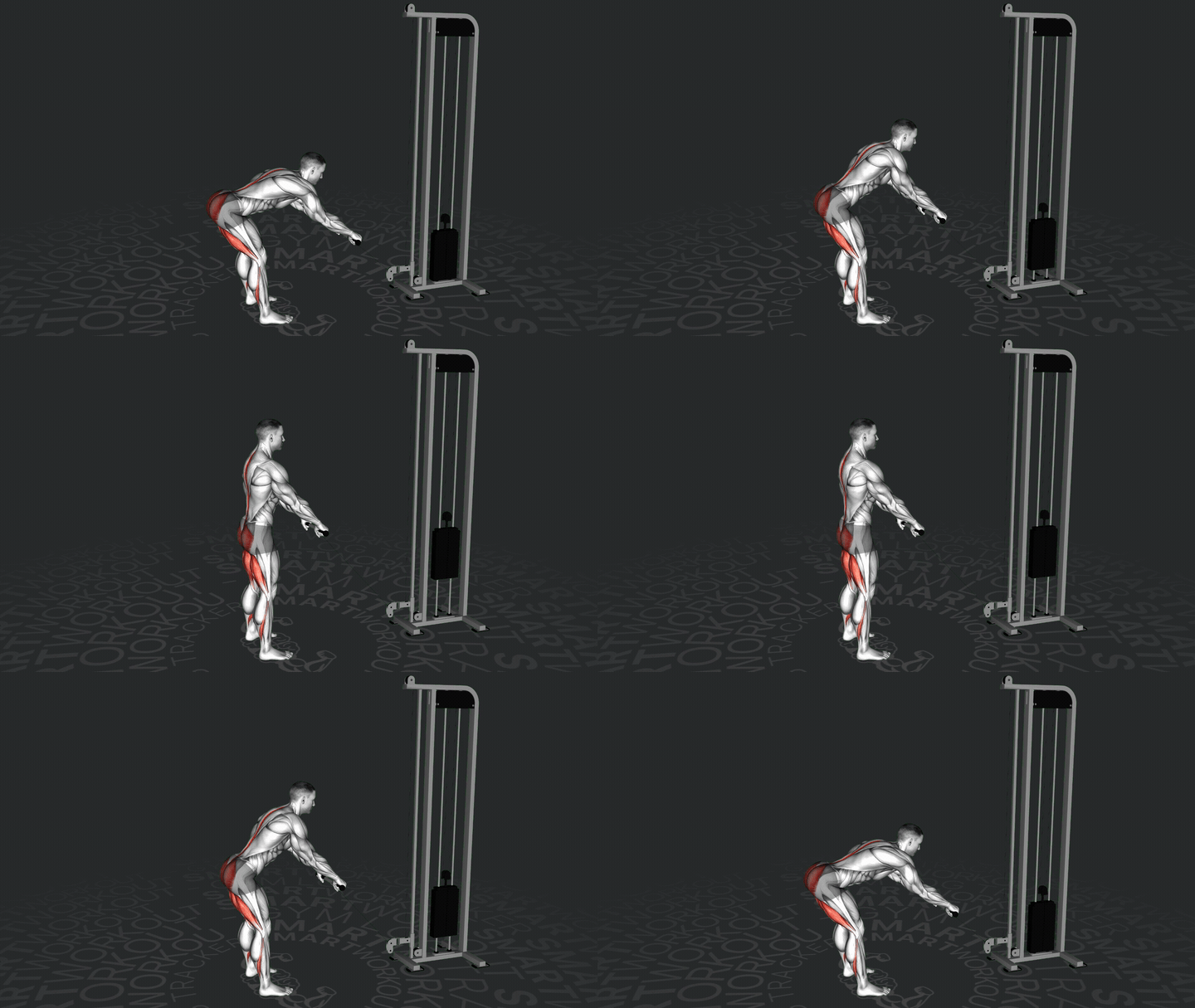
- Hinge at the hips, pushing them back as you lower the dumbbells along the front of your legs.
- Lower the dumbbells until you feel a stretch in your hamstrings, keeping the weights close to your body.
- Engage your glutes and hamstrings to return to the starting position by driving your hips forward.
- Repeat for the desired number of repetitions.
exercise_detail.what_muscles_work
exercise_detail.primary_muscle:
exercise_detail.secondary_muscles:
exercise_detail.tips
- Maintain a neutral spine throughout the movement to avoid injury.
- Focus on hinging at the hips rather than bending at the waist.
- Keep the dumbbells close to your legs to maintain balance and control.
- Engage your core muscles to stabilize your torso during the exercise.
- Start with lighter weights to master form before progressing to heavier loads.
- Ensure that your knees remain slightly bent but do not lock them out.
exercise_detail.common_mistakes
- Bending the knees excessively, turning the movement into a squat rather than a hinge.
- Rounding the lower back, which can lead to strain or injury.
- Allowing the shoulders to roll forward, disengaging the upper back muscles.
- Not keeping the dumbbells close to the body, reducing control and effectiveness.
- Hyperextending the lower back at the top of the movement, risking injury.
- Using momentum instead of controlled movement, reducing muscle engagement.
- Not maintaining a neutral spine throughout the exercise.
- Descending too low, causing the back to round and losing tension in the hamstrings.
- Failing to engage the core, leading to instability and poor form.
- Lifting with the arms instead of hinging at the hips, reducing the focus on posterior chain muscles.
exercise_detail.recommended_exercises
exercise_detail.recommended_exercises_intro
exercise_detail.app_ad.title
exercise_detail.app_ad.description