Sumo Squat
StrengthMobilityFunctional
Track Sumo Squat in SmartWorkout and watch your numbers go up
Log sets, weights and progress for free, with no workout limits.


Body Part: Legs
Description
The Sumo Squat is a lower body exercise that targets the quadriceps, hamstrings, glutes, and inner thighs. It involves a wider stance than a traditional squat, which emphasizes the adductor muscles and provides a different angle of engagement for the lower body muscles.
How to Perform
- Stand with your feet wider than shoulder-width apart and toes pointed slightly outward.
- Keep your chest up, shoulders back, and core engaged throughout the movement.
- Lower your body by bending your knees and pushing your hips back as if sitting into a chair.
- Ensure your knees track over your toes and do not extend past them.
- Descend until your thighs are parallel to the floor or slightly below, depending on flexibility.
- Press through your heels to return to the starting position, fully extending your hips and knees.
What Muscles Work
Primary Muscle:
Secondary Muscles:
Tips
- Maintain a neutral spine throughout the movement to avoid lower back strain.
- Focus on keeping your weight distributed evenly across your feet, particularly pressing through the heels.
- Engage your core to stabilize your torso and prevent leaning forward.
- Adjust your stance width based on comfort and flexibility to ensure proper form.
- Control the descent and ascent to maximize muscle engagement and reduce injury risk.
- Inhale as you lower down and exhale as you push back up to maintain breathing rhythm.
Common Mistakes
- Feet positioned too narrowly, reducing stability and limiting range of motion.
- Knees collapsing inward, increasing stress on the joints.
- Hips not pushed back enough, leading to excessive forward knee movement.
- Torso leaning too far forward, shifting weight away from the heels.
- Not maintaining a neutral spine, causing unnecessary strain on the back.
- Failing to engage core muscles, reducing overall control and stability.
- Descending too quickly, compromising control and muscle engagement.
- Not squatting low enough to fully activate glutes and inner thighs.
- Allowing heels to lift off the ground, decreasing balance and power.
- Rising unevenly, causing an imbalance in muscle activation.
Recommended Exercises
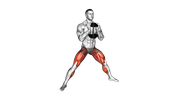
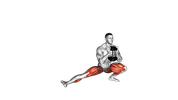
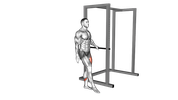
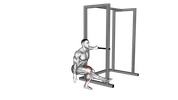
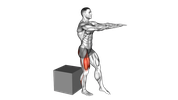
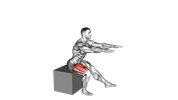
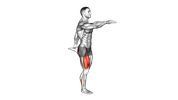
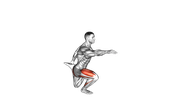
Explore exercises related to Sumo Squat for legs training and similar movement patterns.
Choose a workout plan or create your own - for free
Ready-made plans for every goal, a free plan creator, hundreds of exercises and an advanced workout journal - all in SmartWorkout.


Start with a free plan. Keep progressing with SmartWorkout.
- users
- 200k+
- exercises with technique guides
- 1,000+
- workouts on the free plan
- ∞