Barbell Overhead Press
enums.exercise_tag.STRENGTHenums.exercise_tag.PUSH
exercise_detail.body_part: enums.body_part.SHOULDERS
exercise_detail.description
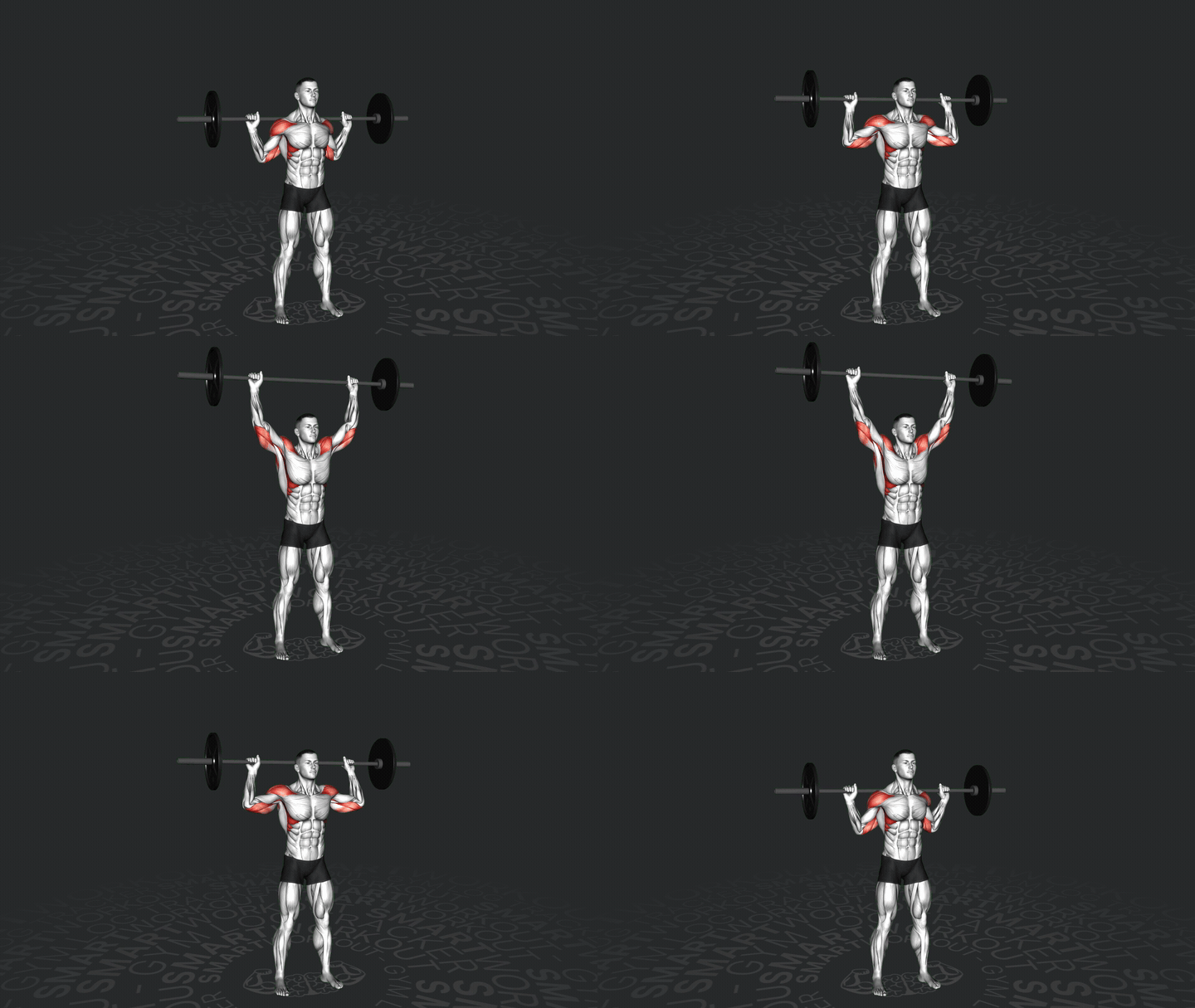
The Barbell Shoulder Press is a compound exercise that targets the deltoid muscles of the shoulders, as well as the triceps and upper chest. It involves pressing a barbell overhead while standing or seated, engaging multiple muscle groups for strength and stability.
exercise_detail.how_to_perform
- Begin by setting up a barbell on a rack at about chest height.
- Stand with your feet shoulder-width apart and grip the barbell with an overhand grip, slightly wider than shoulder-width.
- Unrack the barbell and hold it at shoulder height with your elbows slightly in front of the bar.
- Engage your core and keep your back straight throughout the movement.
- Press the barbell overhead by extending your arms until they are fully extended but not locked out.
- Lower the barbell back to shoulder height in a controlled manner.
- Repeat for the desired number of repetitions.
exercise_detail.what_muscles_work
exercise_detail.primary_muscle:
exercise_detail.secondary_muscles:
exercise_detail.tips
- Keep your core tight to maintain stability and prevent lower back strain.
- Avoid arching your back excessively; maintain a neutral spine position.
- Ensure your elbows are slightly forward to engage the deltoids effectively.
- Use a spotter if lifting heavy weights to ensure safety.
- Focus on a full range of motion for maximum muscle engagement.
- Breath out as you press the barbell up and inhale as you lower it down.
exercise_detail.common_mistakes
- Arching the lower back excessively, increasing the risk of lower back strain.
- Pressing the barbell forward instead of directly overhead, leading to shoulder impingement.
- Failing to keep the elbows slightly in front of the bar, reducing shoulder engagement.
- Using momentum or leg drive to lift the bar, decreasing upper body muscle activation.
- Not fully extending the elbows at the top, limiting range of motion and shoulder activation.
- Allowing the wrists to bend backward, increasing strain on the wrists and forearms.
- Neglecting to engage the core, resulting in poor stability and potential balance issues.
- Starting with the bar too low on the chest, causing inefficient pressing mechanics.
- Not keeping the head in a neutral position, leading to neck strain.
exercise_detail.recommended_exercises
exercise_detail.recommended_exercises_intro
exercise_detail.app_ad.title
exercise_detail.app_ad.description