Lever Seated Hammer Grip Shoulder Press
enums.exercise_tag.STRENGTHenums.exercise_tag.PUSH
exercise_detail.body_part: enums.body_part.SHOULDERS
exercise_detail.description
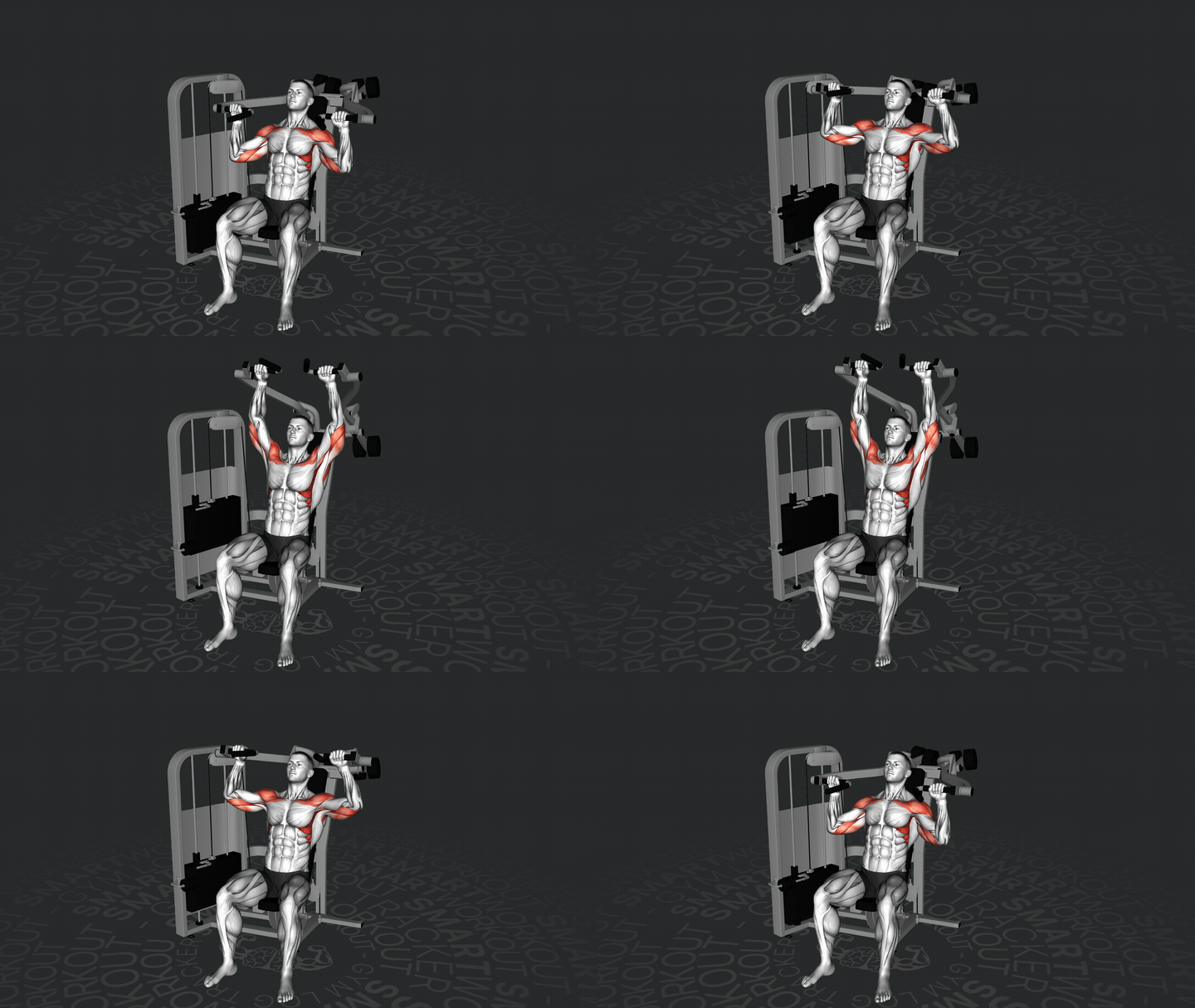
The Lever Seated Hammer Grip Shoulder Press is a machine-based exercise targeting the deltoid muscles, particularly the anterior and lateral heads. It involves pressing weights upward using a neutral grip, which can reduce strain on the shoulder joints compared to traditional grips. This exercise is beneficial for building shoulder strength and muscle mass.
exercise_detail.how_to_perform
- Adjust the seat height so that the handles are at shoulder level when seated.
- Sit down and firmly plant your feet on the ground, maintaining a slight arch in your lower back.
- Grasp the handles with a neutral grip (palms facing each other).
- Engage your core and press the handles upward by extending your elbows until your arms are fully extended but not locked.
- Pause briefly at the top of the movement, ensuring not to shrug your shoulders.
- Slowly lower the handles back to the starting position with control.
- Repeat for the desired number of repetitions.
exercise_detail.what_muscles_work
exercise_detail.primary_muscle:
exercise_detail.secondary_muscles:
exercise_detail.tips
- Keep your core engaged throughout the exercise to maintain stability.
- Avoid locking your elbows at the top of the movement to reduce joint stress.
- Focus on a slow and controlled descent to maximize muscle engagement.
- Ensure your wrists remain in a neutral position to prevent strain.
- Maintain a steady breathing pattern; exhale while pressing up and inhale while lowering.
- Adjust the weight appropriately to ensure proper form is maintained throughout all repetitions.
exercise_detail.common_mistakes
- Failing to adjust the seat height properly, leading to improper alignment of the handles with the shoulders.
- Allowing the elbows to flare out excessively, which can reduce shoulder engagement and increase strain on the joints.
- Using momentum to lift the weight instead of controlled muscle contraction, reducing effectiveness and increasing injury risk.
- Not maintaining a neutral spine, which can lead to poor posture and reduce core engagement.
- Locking out the elbows at the top of the movement, causing unnecessary joint stress.
- Allowing the wrists to bend excessively, which can lead to discomfort and reduce control.
- Not engaging the core, leading to instability and reduced power output.
- Lowering the handles too quickly, which can compromise muscle tension and control.
- Starting with too heavy a weight, leading to compromised form and reduced range of motion.
exercise_detail.recommended_exercises
exercise_detail.recommended_exercises_intro
exercise_detail.app_ad.title
exercise_detail.app_ad.description