Cable Front Raise
enums.exercise_tag.STRENGTHenums.exercise_tag.PUSH
exercise_detail.body_part: enums.body_part.SHOULDERS
exercise_detail.description
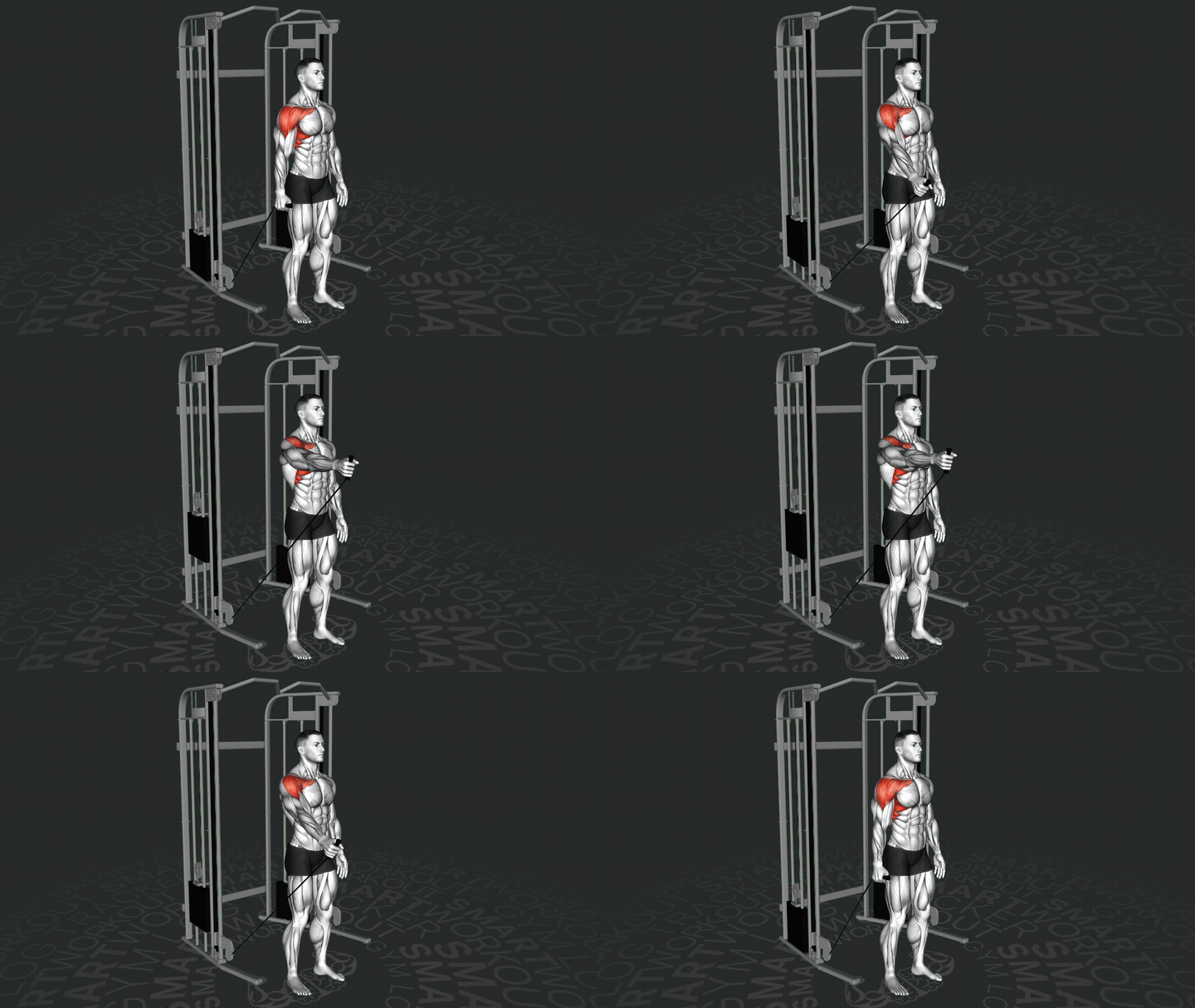
The Cable Front Raise is an isolation exercise targeting the anterior deltoids. It involves lifting a cable handle in front of the body, engaging the shoulder muscles to raise the arm. This exercise helps in building shoulder strength and improving muscle definition.
exercise_detail.how_to_perform
- Attach a straight bar or single handle to the low pulley of a cable machine.
- Stand facing away from the machine, feet shoulder-width apart, and grasp the handle with an overhand grip.
- Position your arms straight down in front of your thighs with a slight bend in the elbows.
- Engage your core and keep your back straight throughout the movement.
- Exhale as you lift the handle forward and upward until your arms are parallel to the floor.
- Pause briefly at the top of the movement, ensuring tension in the shoulders.
- Inhale as you slowly lower the handle back to the starting position with control.
- Repeat for the desired number of repetitions.
exercise_detail.what_muscles_work
exercise_detail.primary_muscle:
exercise_detail.secondary_muscles:
exercise_detail.tips
- Keep your movements slow and controlled to maximize muscle engagement.
- Avoid using momentum; focus on using your shoulder muscles to lift the weight.
- Maintain a slight bend in your elbows throughout to reduce joint strain.
- Ensure your shoulders do not shrug during the lift; keep them down and relaxed.
- Start with a lighter weight to master form before progressing to heavier loads.
- Keep your core tight to stabilize your body and prevent arching of the back.
exercise_detail.common_mistakes
- Using too much weight, leading to swinging or jerking motions.
- Leaning back excessively, which reduces shoulder engagement.
- Raising the arms above shoulder level, causing unnecessary strain.
- Engaging the traps instead of focusing on the front deltoids.
- Allowing the wrists to bend, reducing tension on the shoulders.
- Using momentum instead of controlled, steady movements.
- Failing to maintain a slight bend in the elbows, increasing joint stress.
- Starting the movement with the cable too far from the body, reducing range of motion.
- Not keeping the core engaged, leading to poor posture and balance.
exercise_detail.recommended_exercises
exercise_detail.recommended_exercises_intro
exercise_detail.app_ad.title
exercise_detail.app_ad.description