Dumbbell Snatch
enums.exercise_tag.STRENGTHenums.exercise_tag.EXPLOSIVEenums.exercise_tag.FUNCTIONAL
exercise_detail.body_part: enums.body_part.SHOULDERS
exercise_detail.description
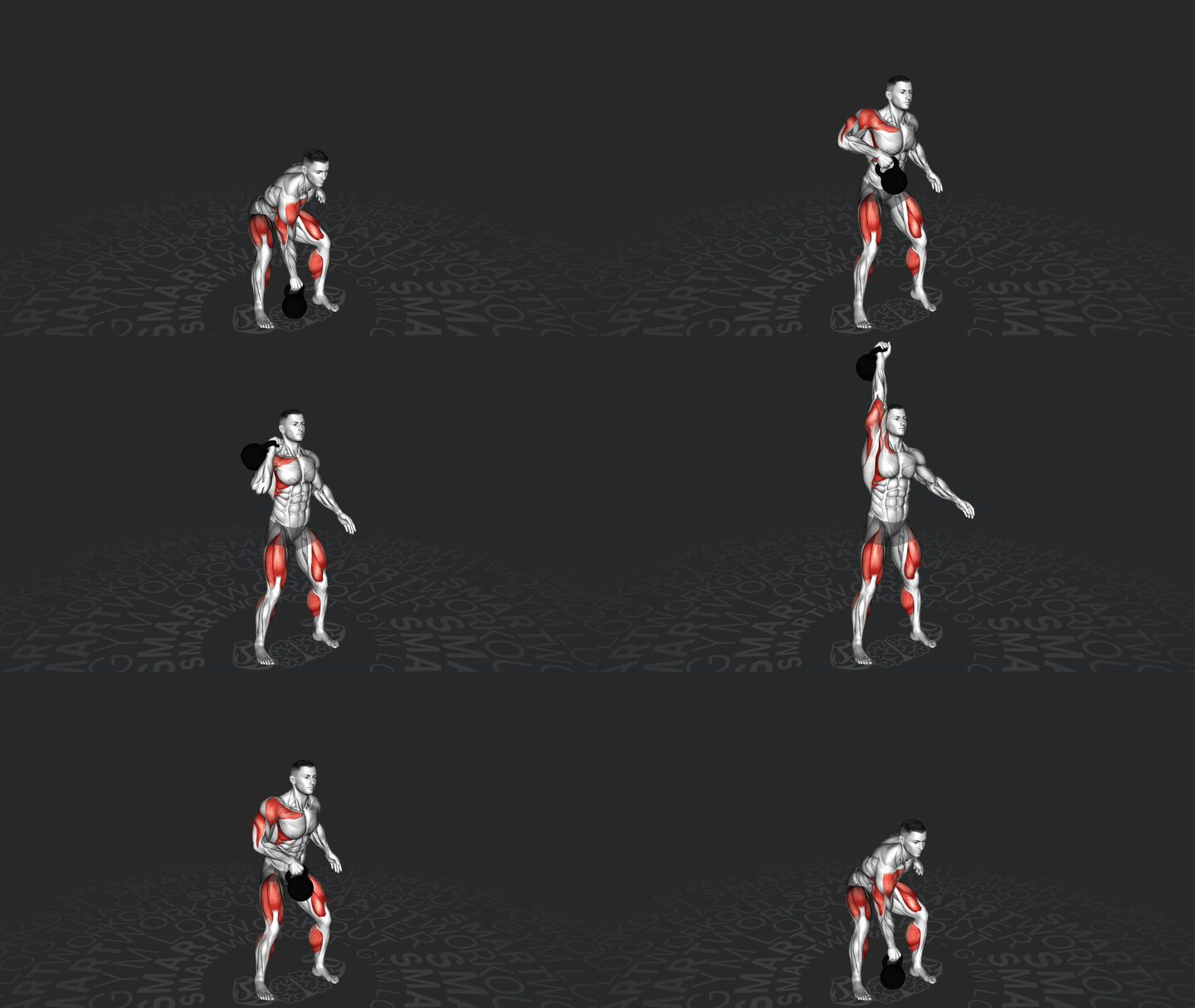
The one-arm dumbbell snatch is a dynamic, full-body exercise that primarily targets the shoulders, back, and legs. It enhances power, coordination, and explosiveness by involving multiple muscle groups in a single, fluid motion.
exercise_detail.how_to_perform
- Stand with feet shoulder-width apart, holding a dumbbell in one hand between your legs.
- Bend your knees slightly and hinge at the hips to lower the dumbbell towards the floor.
- Explosively extend your hips and knees while pulling the dumbbell upward close to your body.
- As the dumbbell reaches shoulder height, quickly rotate your elbow under it and extend your arm overhead.
- Lock out your arm at the top position, keeping your core engaged and body stable.
- Lower the dumbbell back to the starting position in a controlled manner.
exercise_detail.what_muscles_work
exercise_detail.primary_muscle:
exercise_detail.secondary_muscles:
exercise_detail.tips
- Focus on generating power from your hips and legs rather than relying solely on your arm strength.
- Keep the dumbbell close to your body during the upward pull to maintain control and efficiency.
- Engage your core throughout the movement to stabilize your body and prevent injury.
- Practice with lighter weights initially to perfect form before progressing to heavier loads.
- Ensure a firm grip on the dumbbell to maintain control during the snatch.
exercise_detail.common_mistakes
- Starting with feet too wide or too narrow, affecting balance and power generation.
- Using arms too early instead of driving with hips and legs.
- Not keeping the dumbbell close to the body during the pull phase.
- Failing to fully extend hips and knees before pulling the dumbbell overhead.
- Catching the dumbbell with a bent elbow instead of locking it out overhead.
- Allowing the back to round instead of maintaining a neutral spine.
- Using a weight that is too heavy, compromising form and control.
- Neglecting to engage core muscles, leading to instability.
- Landing with feet too far apart, reducing stability in the catch position.
- Not controlling the descent, leading to a potential loss of balance.
exercise_detail.recommended_exercises
exercise_detail.recommended_exercises_intro
exercise_detail.app_ad.title
exercise_detail.app_ad.description