Seated Shoulder External Rotation
enums.exercise_tag.REHABenums.exercise_tag.MOBILITY
exercise_detail.body_part: enums.body_part.SHOULDERS
exercise_detail.description
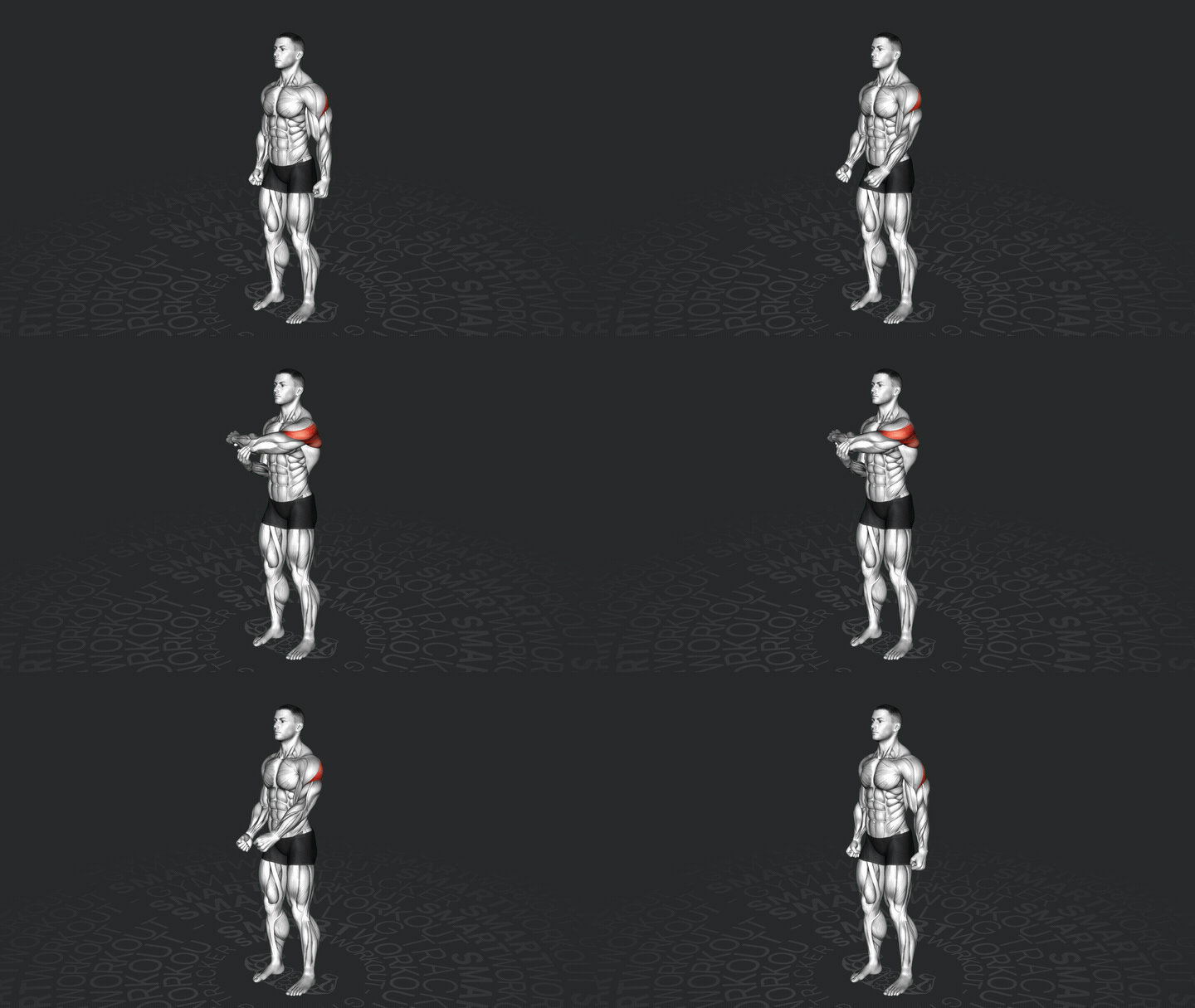
The Seated Shoulder External Rotation is an isolation exercise targeting the rotator cuff muscles, specifically the infraspinatus and teres minor. It is performed using a resistance band or cable machine to improve shoulder stability and mobility.
exercise_detail.how_to_perform
- Sit on a bench or chair with your back straight and feet flat on the floor.
- Attach a resistance band or set up a cable machine at elbow height.
- Hold the handle or band with your working arm, keeping your elbow bent at 90 degrees and close to your side.
- Start with your forearm across your abdomen, then slowly rotate your arm outward, keeping your elbow fixed in place.
- Continue the rotation until your forearm is perpendicular to your torso or as far as comfortable without pain.
- Pause briefly at the end of the movement, then slowly return to the starting position.
- Perform the desired number of repetitions, then switch arms if necessary.
exercise_detail.what_muscles_work
exercise_detail.primary_muscle:
exercise_detail.tips
- Maintain a neutral wrist position throughout the exercise to avoid unnecessary strain.
- Keep your core engaged to stabilize your torso and prevent compensatory movements.
- Focus on slow, controlled movements to maximize muscle engagement and reduce injury risk.
- Ensure that your elbow remains close to your body to effectively target the rotator cuff muscles.
- Start with light resistance to master proper form before progressing to heavier loads.
- Breathe steadily, exhaling during the outward rotation and inhaling as you return to the start position.
exercise_detail.common_mistakes
- Using too much weight, leading to uncontrolled movements.
- Allowing the elbow to drift away from the body, reducing isolation of the rotator cuff.
- Rotating the shoulder too far back, causing strain on the joint.
- Failing to keep the wrist neutral, resulting in unnecessary strain.
- Engaging the upper trapezius instead of focusing on the rotator cuff.
- Leaning back or forward, compromising shoulder alignment.
- Using momentum instead of controlled, deliberate motion.
- Neglecting to maintain a 90-degree angle at the elbow, affecting range of motion.
exercise_detail.recommended_exercises
exercise_detail.recommended_exercises_intro
exercise_detail.app_ad.title
exercise_detail.app_ad.description