Barbell Shoulder Shrug
enums.exercise_tag.STRENGTH
exercise_detail.body_part: enums.body_part.BACK
exercise_detail.description
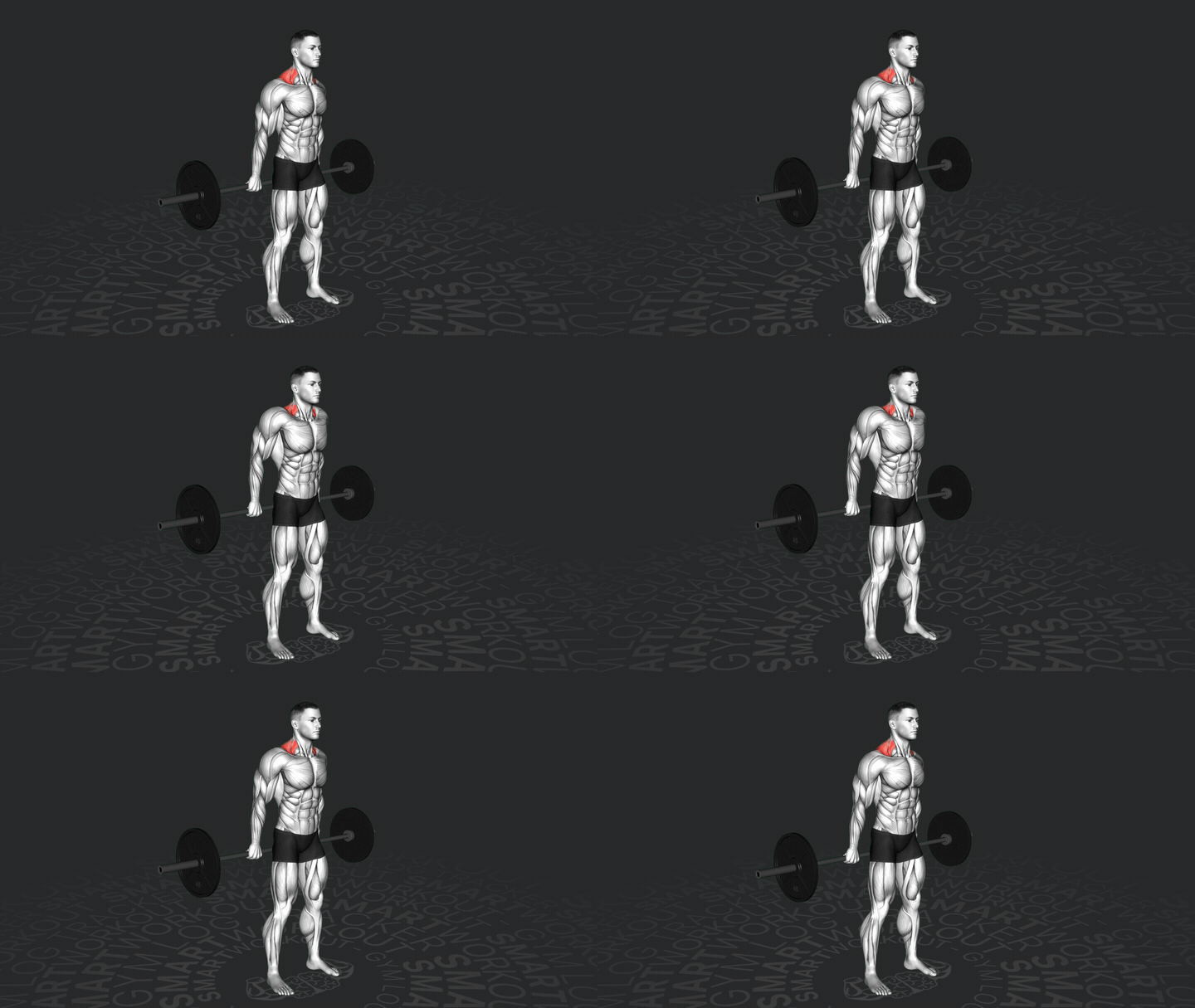
The Barbell Shoulder Shrug is an isolation exercise targeting the trapezius muscles. It involves lifting the shoulders towards the ears while holding a barbell, effectively engaging the upper back and neck muscles. This exercise is essential for building strength and mass in the upper trapezius region.
exercise_detail.how_to_perform
- Stand with your feet shoulder-width apart, holding a barbell with an overhand grip in front of your thighs.
- Keep your arms fully extended and your back straight throughout the movement.
- Lift your shoulders straight up towards your ears as high as possible, squeezing the trapezius muscles at the top of the movement.
- Hold the contraction for a brief moment before slowly lowering the shoulders back to the starting position.
- Repeat for the desired number of repetitions, maintaining control and avoiding any jerking motions.
exercise_detail.what_muscles_work
exercise_detail.primary_muscle:
exercise_detail.tips
- Focus on using only your shoulders to lift the weight; avoid using your arms or bending your elbows.
- Keep your core engaged to maintain stability and prevent any swaying or arching of the back.
- Exhale as you lift your shoulders and inhale as you lower them back down.
- Start with a lighter weight to master proper form before progressing to heavier loads.
- Perform the exercise in front of a mirror if possible to ensure correct posture and technique.
exercise_detail.common_mistakes
- Using excessive weight leading to poor form and reduced range of motion.
- Rolling shoulders instead of lifting them straight up and down.
- Not fully engaging the trapezius muscles, relying too much on arm movement.
- Lifting with a jerking motion instead of controlled, steady movements.
- Allowing the barbell to drift away from the body, reducing effectiveness.
- Bending the elbows, turning the exercise into a partial upright row.
- Shrugging too quickly, preventing proper muscle contraction.
- Failing to maintain a neutral spine, leading to poor posture.
exercise_detail.recommended_exercises
exercise_detail.recommended_exercises_intro
exercise_detail.app_ad.title
exercise_detail.app_ad.description