Low Cable Incline Bench Press
enums.exercise_tag.STRENGTHenums.exercise_tag.PUSH
exercise_detail.body_part: enums.body_part.CHEST
exercise_detail.description
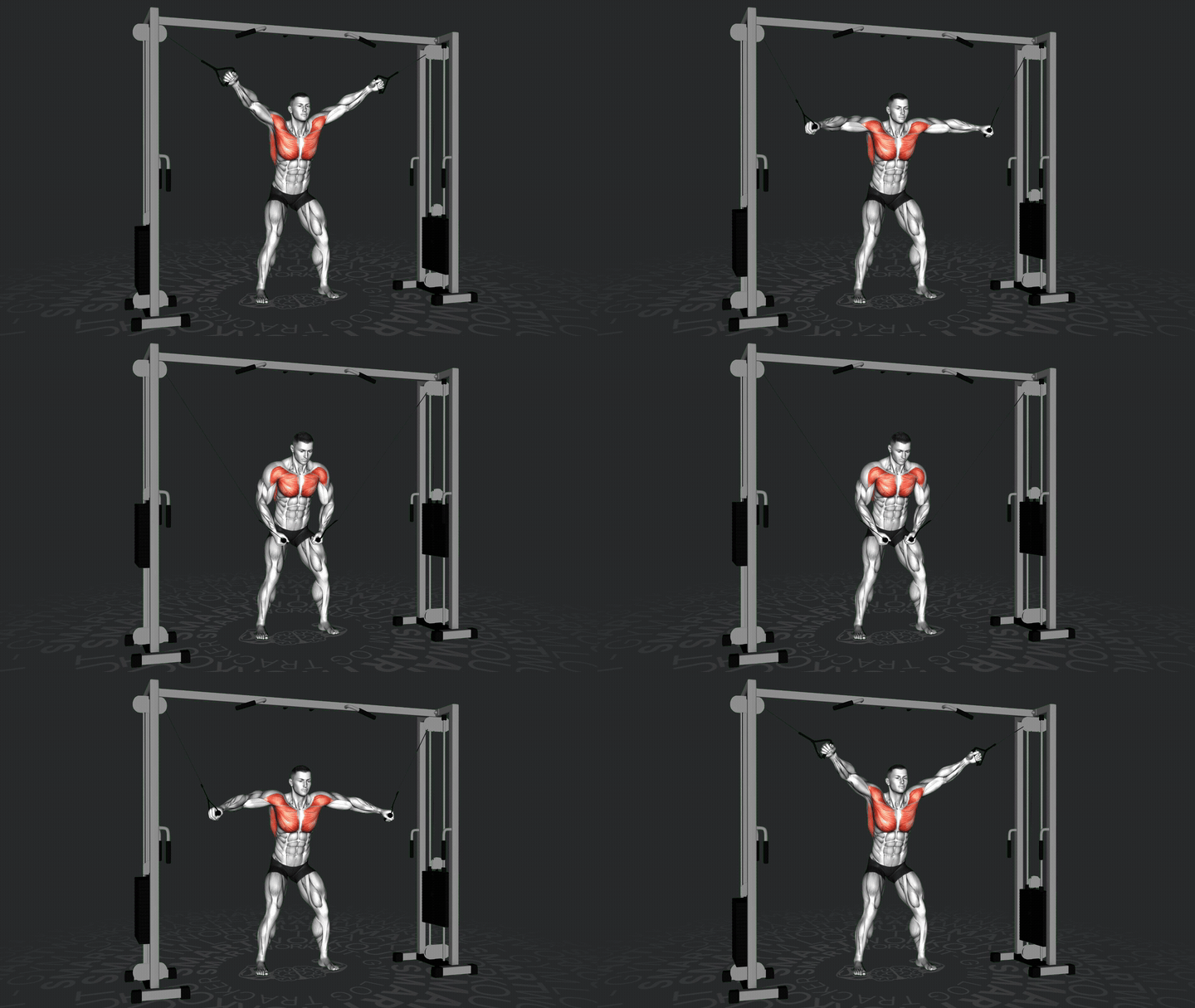
The Low Cable Incline Bench Press is a compound exercise targeting the upper chest muscles, specifically the clavicular head of the pectoralis major. This exercise also engages the anterior deltoids and triceps. By using cables, it provides constant tension throughout the movement, enhancing muscle activation and growth.
exercise_detail.how_to_perform
- Set an incline bench at a 30-45 degree angle in front of a cable machine.
- Attach handles to the low pulleys on each side of the machine.
- Sit on the bench with your back firmly against it and feet flat on the floor.
- Grab the handles with an overhand grip, palms facing forward.
- Position your hands at chest level, elbows bent at approximately 90 degrees.
- Press the handles upward and slightly inward until your arms are fully extended but not locked.
- Pause briefly at the top of the movement, squeezing your chest muscles.
- Slowly lower the handles back to the starting position, maintaining control.
exercise_detail.what_muscles_work
exercise_detail.primary_muscle:
exercise_detail.secondary_muscles:
exercise_detail.tips
- Ensure that your back remains firmly against the bench to prevent strain.
- Maintain a controlled motion throughout to maximize muscle engagement.
- Avoid locking your elbows at the top to keep tension on your muscles.
- Focus on squeezing your chest muscles at the peak of each rep for better activation.
- Keep your core engaged to stabilize your body during the exercise.
- Adjust the bench angle if necessary to target different areas of the chest.
exercise_detail.common_mistakes
- Allowing the elbows to flare out excessively, reducing chest engagement and increasing shoulder strain.
- Arching the lower back excessively, compromising spinal alignment and stability.
- Using too much weight, leading to uncontrolled movement and reduced muscle activation.
- Failing to maintain a stable shoulder position, causing excessive shoulder movement and potential joint stress.
- Lowering the cables too quickly, reducing time under tension and control.
- Not fully extending the arms at the top of the movement, limiting range of motion and muscle activation.
- Positioning the bench at too steep an incline, shifting focus away from the upper chest.
- Allowing the wrists to bend backward, increasing strain on the wrists and forearms.
- Neglecting to engage the core, leading to instability and reduced power transfer.
- Letting the cables move out of alignment with the chest, causing uneven muscle engagement.
exercise_detail.recommended_exercises
exercise_detail.recommended_exercises_intro
exercise_detail.app_ad.title
exercise_detail.app_ad.description