Low-to-High Cable Fly
Also known as: Low Cable Fly, Low-to-High Cable Crossover, Low High Cable Chest Fly
Track this exercise in SmartWorkout
Log sets, weights and progress for free, with no workout limits.


Description
Stand between the low pulleys of a cable crossover and sweep two handles from your hips up and in to shoulder height to build your upper chest. You feel it mostly just below the collarbones, spreading toward the breastbone as the hands meet, with the middle chest, front delts and serratus anterior helping. The cables pull from below, so the top of the rep stays hard, right where a dumbbell fly goes slack. The low pulleys don't make it a lower-chest move: for the lower chest, set the pulleys high and do the High Low Cable Chest Fly instead.
How to Perform
- Set both pulleys of the crossover to the lowest notch, clip a single D-handle to each cable and pick the same weight on both stacks.
- Take the handles underhand, palms forward, and stand in the middle, half a step in front of the pulleys, with both stacks lifted.
- Stagger your feet half a step, knees soft. Chest up, shoulder blades back and down, hands by your hips, elbows slightly bent.
- Lock that elbow bend in and sweep both hands forward, up and in along a wide arc, as if scooping something up toward your chin.
- Stop when your hands meet in front of the upper chest at shoulder height, palms up, and squeeze for about a second without shrugging.
- Take 2–3 seconds to bring your hands down until they are back by your hips and the upper chest feels a light stretch.
- Only your shoulders move. Torso, hips and feet stay put, and the weights don't touch the stack until the set is done.
- When you finish, step back toward the pulleys so the stacks settle before you let go of the handles.
What Muscles Work
Primary Muscle:
Secondary Muscles:
Tips
- Sets of 12–20 reps work for most people, 2–4 of them taken close to failure. If a weight won't give you about 8 clean reps, the fly turns into a curl or a press. Add reps at the same weight until you get 20 in every set with the same arc, then go up one stack step on both sides and start again at 12.
- Many crossover stations run a 2:1 pulley ratio, so the number on the stack is more than you're holding. If one stack step is too big a jump, earn it with extra reps or use the add-on weight.
- Biceps burning? Your elbows are bending and you're curling. If the fronts of your shoulders take over, your hands are finishing too high or the weight is too heavy.
- Can't find your upper chest yet? Learn the arc one arm at a time with your free hand on the frame. Once that's easy, add a 1–2 second squeeze at the top and a 3–4 second lowering before you add weight.
- The load is light and your shoulders never go into a deep stretch, so it's easy on the joints at any training level. It works well as a finisher after incline presses.
- Substitutes: One-Arm Low-to-High Cable Fly; Dumbbell Low to High Fly when no cable station is free; Incline Bench Cable Fly to load the upper chest harder with your body supported; Incline Dumbbell Chest Fly.
Common Mistakes
- Bending the elbows on the way up until the handles get curled toward your shoulders. Set a slight bend before the first rep and keep it; if it keeps creeping, the weight is too heavy.
- Raising the hands to face height or overhead. Stop where they meet at shoulder height. Above that, your front delts do the lifting and your shoulders start to shrug.
- Lifting straight forward like a front raise, with the hands staying shoulder-width apart. Think "up and in" so they meet at the middle of your chest.
- Standing behind the pulleys, so the cables drag your arms behind your body at the bottom. Start half a step in front of them and finish each lowering with your hands by your hips: a deep stretch under a heavy stack strains the front of the shoulder.
Recommended Exercises
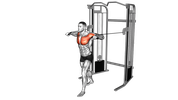
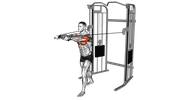
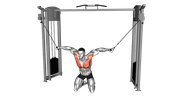
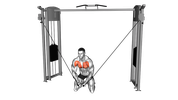
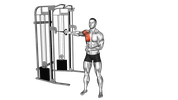
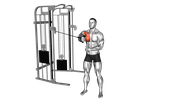
Explore exercises related to Low-to-High Cable Fly for chest training and similar movement patterns.
Choose a workout plan or create your own - for free
Ready-made plans for every goal, a free plan creator, hundreds of exercises and an advanced workout journal - all in SmartWorkout.