Lying Cable Fly
StrengthPush
Track Lying Cable Fly in SmartWorkout and watch your numbers go up
Log sets, weights and progress for free, with no workout limits.


Body Part: Chest
Description
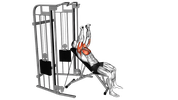
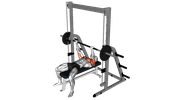
The Lying Cable Fly is an isolation exercise targeting the pectoral muscles. It involves lying on a flat bench and using cables to perform a fly motion, which helps in developing the chest by focusing on the inner and outer portions of the pectorals. This exercise also engages the shoulders and triceps as secondary muscles.
How to Perform
- Set the pulleys on a cable machine to the lowest position and attach single handle grips.
- Lie flat on a bench positioned between the cable stacks, ensuring your feet are flat on the floor.
- Grasp each handle with an overhand grip, palms facing each other, and extend your arms straight up above your chest.
- With a slight bend in your elbows, slowly lower your arms out to the sides in a wide arc until you feel a stretch in your chest.
- Pause briefly at the bottom of the movement, then bring your arms back to the starting position by squeezing your chest muscles.
- Repeat for the desired number of repetitions, maintaining control throughout the motion.
What Muscles Work
Primary Muscle:
Secondary Muscles:
Tips
- Keep a slight bend in your elbows throughout the exercise to reduce stress on the joints.
- Focus on squeezing your chest muscles as you bring your arms back together to maximize muscle engagement.
- Maintain a controlled motion; avoid letting the weights pull your arms back too quickly.
- Ensure that your shoulder blades remain in contact with the bench to stabilize your upper body.
- Breathe out as you bring your arms together and inhale as you lower them back down.
Common Mistakes
- Allowing the elbows to drop too low, reducing chest engagement and increasing shoulder strain.
- Using too much weight, leading to uncontrolled movements and poor form.
- Failing to maintain a slight bend in the elbows, which can stress the elbow joints.
- Not keeping the shoulders retracted, causing the shoulders to take over the movement.
- Bringing the cables too close together, losing tension on the chest muscles.
- Arching the lower back excessively, which can lead to improper core engagement.
- Lifting the head off the bench, causing neck strain and misalignment.
- Moving the arms too quickly, reducing time under tension and control.
Recommended Exercises
Explore exercises related to Lying Cable Fly for chest training and similar movement patterns.


Choose a workout plan or create your own - for free
Ready-made plans for every goal, a free plan creator, hundreds of exercises and an advanced workout journal - all in SmartWorkout.