One-Arm High-to-Low Cable Fly
StrengthPush
Track One-Arm High-to-Low Cable Fly in SmartWorkout and watch your numbers go up
Log sets, weights and progress for free, with no workout limits.


Body Part: Chest
Description
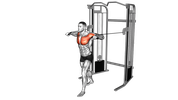
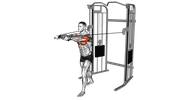
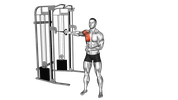
The One-Arm High-to-Low Cable Fly is an isolation exercise targeting the pectoral muscles, specifically the lower chest. It involves pulling a cable from a high position to a low position across the body, engaging the chest, shoulders, and triceps. This exercise helps in developing muscle symmetry and improving unilateral strength.
How to Perform
- Set the cable machine to a high position and attach a single handle.
- Stand sideways to the machine with your feet shoulder-width apart.
- Grasp the handle with one hand, keeping your arm extended but slightly bent at the elbow.
- Step away from the machine to create tension in the cable.
- Position your non-working hand on your hip or at your side for balance.
- Engage your core and keep your torso upright throughout the movement.
- Pull the handle down and across your body in a controlled motion until it reaches hip level.
- Pause briefly at the bottom of the movement, squeezing your chest muscles.
- Slowly return to the starting position, maintaining control of the cable.
- Complete the desired number of repetitions before switching to the other arm.
What Muscles Work
Primary Muscle:
Tips
- Focus on using your chest muscles to move the weight, not your arms.
- Keep a slight bend in your elbow to reduce strain on the joint.
- Maintain a stable stance to prevent swaying during the exercise.
- Control the movement speed, especially when returning to the start position.
- Ensure that your shoulder blades are retracted and down throughout the exercise.
- Avoid leaning forward or backward; keep your torso upright for proper form.
Common Mistakes
- Using too much weight, causing loss of control and improper form.
- Allowing the shoulder to internally rotate excessively, leading to strain.
- Not maintaining a slight bend in the elbow, resulting in joint stress.
- Failing to engage the core, causing instability and poor posture.
- Leaning too far forward or backward, disrupting balance and alignment.
- Not fully extending the arm at the top of the movement, limiting range of motion.
- Allowing the cable to pull the arm back too quickly, losing tension on the muscle.
- Twisting the torso instead of keeping it stable, reducing isolation of the chest muscle.
- Dropping the arm too low at the end of the movement, risking shoulder strain.
Recommended Exercises
Explore exercises related to One-Arm High-to-Low Cable Fly for chest training and similar movement patterns.
Choose a workout plan or create your own - for free
Ready-made plans for every goal, a free plan creator, hundreds of exercises and an advanced workout journal - all in SmartWorkout.