One-Arm Low-to-High Cable Fly
StrengthPush
Track this exercise in SmartWorkout
Log sets, weights and progress for free, with no workout limits.


Body Part: Chest
Description
The One-Arm Low-to-High Cable Fly is an isolation exercise targeting the pectoral muscles, particularly the upper chest. It involves pulling a cable from a low position to a high position across the body, engaging the chest, shoulders, and core for stabilization. This exercise helps in developing chest symmetry and enhancing muscle definition.
How to Perform
- Set the cable pulley to the lowest position and attach a single handle.
- Stand sideways to the cable machine with your feet shoulder-width apart.
- Grasp the handle with one hand, keeping your arm extended but slightly bent at the elbow.
- Position your body so that your working arm is across your body at hip level.
- Engage your core and maintain a slight bend in your knees for stability.
- Exhale as you pull the handle upward and across your body in a sweeping motion until it reaches shoulder height.
- Pause briefly at the top of the movement, squeezing your chest muscles.
- Inhale as you slowly return to the starting position, controlling the weight throughout.
- Complete the desired number of repetitions before switching to the other arm.
What Muscles Work
Primary Muscle:
Secondary Muscles:
Tips
- Focus on using your chest muscles to move the weight rather than relying on your arms or shoulders.
- Maintain a controlled motion throughout the exercise to maximize muscle engagement and minimize injury risk.
- Keep your core engaged to stabilize your body and prevent unnecessary movement.
- Adjust the cable height if necessary to ensure a full range of motion without discomfort.
- Start with a lighter weight to master the form before progressing to heavier loads.
Common Mistakes
- Starting with the cable too high, reducing the range of motion.
- Allowing the shoulder to lift excessively, causing strain.
- Using momentum instead of controlled movement.
- Not engaging the core, leading to instability.
- Overextending the arm, risking shoulder injury.
- Twisting the torso instead of isolating the arm movement.
- Failing to maintain a slight bend in the elbow, causing joint stress.
- Neglecting to set the feet in a stable stance, affecting balance.
- Letting the wrist bend, reducing tension on the target muscle.
- Pulling with the bicep instead of focusing on the chest contraction.
Recommended Exercises
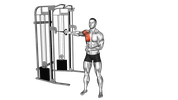
Explore exercises related to One-Arm Low-to-High Cable Fly for chest training and similar movement patterns.
Choose a workout plan or create your own - for free
Ready-made plans for every goal, a free plan creator, hundreds of exercises and an advanced workout journal - all in SmartWorkout.