Smith Incline Chest Press
StrengthPush
Track this exercise in SmartWorkout
Log sets, weights and progress for free, with no workout limits.


Body Part: Chest
Description
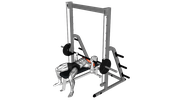
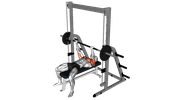
The Smith Incline Chest Press is a compound exercise targeting the upper portion of the pectoral muscles, utilizing the Smith machine for guided movement. This exercise allows for controlled lifting with added stability, making it suitable for both beginners and advanced lifters aiming to enhance upper chest development.
How to Perform
- Set the bench to an incline angle of about 30-45 degrees under the Smith machine bar.
- Position yourself on the bench with your back firmly against it and feet flat on the floor.
- Grip the bar slightly wider than shoulder-width apart, ensuring wrists are straight and aligned with forearms.
- Unrack the bar by rotating it forward and position it directly above your upper chest.
- Inhale and lower the bar slowly to your chest, keeping elbows at a 45-degree angle to your body.
- Pause briefly when the bar is just above your chest without bouncing.
- Exhale and press the bar back up to the starting position, ensuring arms are fully extended but not locked.
- Repeat for the desired number of repetitions.
What Muscles Work
Primary Muscle:
Secondary Muscles:
Tips
- Ensure the bench is securely positioned before starting to prevent any movement during the exercise.
- Maintain a controlled tempo throughout, focusing on both the eccentric (lowering) and concentric (pressing) phases.
- Keep your core engaged to stabilize your body and prevent arching of the back.
- Adjust the incline angle if needed to target different areas of the chest more effectively.
- Warm up properly before attempting heavier weights to reduce risk of injury.
- Use a spotter if lifting heavy to ensure safety, especially when nearing muscle fatigue.
Common Mistakes
- Setting the bench at too steep an angle, which shifts focus from the chest to the shoulders.
- Placing hands too wide or too narrow on the bar, leading to improper chest muscle engagement.
- Failing to maintain a slight arch in the lower back, which can reduce chest activation.
- Allowing the bar to bounce off the chest, reducing muscle tension and control.
- Lowering the bar too far down, causing excessive shoulder strain.
- Pushing the bar unevenly, leading to muscle imbalance and reduced effectiveness.
- Using momentum to lift the bar instead of controlled muscle contraction.
- Not aligning the bar path with the upper chest, which can shift tension away from target muscles.
- Locking out elbows at the top, reducing time under tension for the chest muscles.
- Neglecting to engage the core, which can lead to instability during the lift.
Recommended Exercises
Explore exercises related to Smith Incline Chest Press for chest training and similar movement patterns.




Choose a workout plan or create your own - for free
Ready-made plans for every goal, a free plan creator, hundreds of exercises and an advanced workout journal - all in SmartWorkout.