Glute Cable Kickback
enums.exercise_tag.STRENGTHenums.exercise_tag.FUNCTIONAL
exercise_detail.body_part: enums.body_part.GLUTEUS
exercise_detail.description
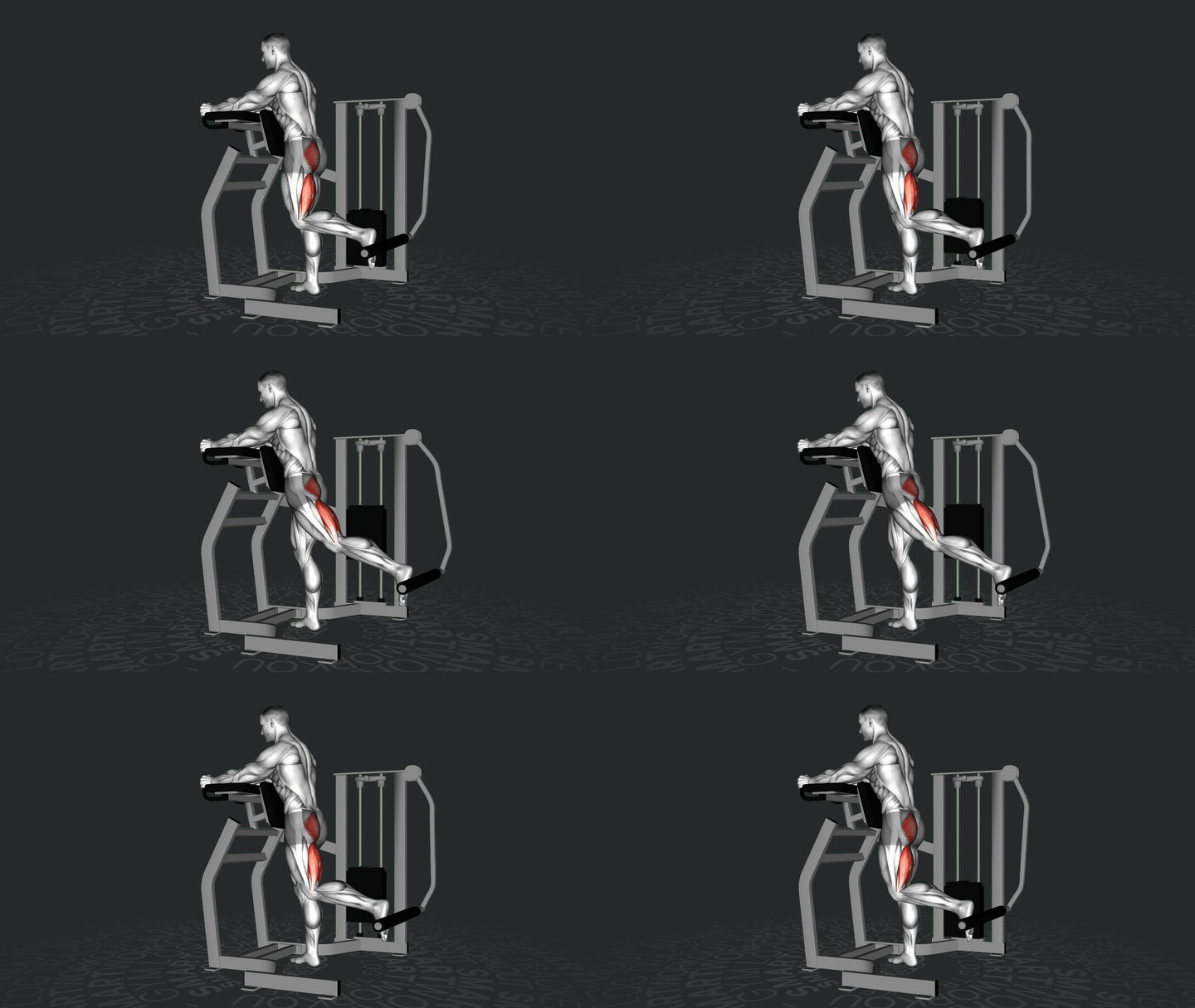
The Glute Cable Kickback is an isolation exercise targeting the gluteus maximus. It involves extending the hip against resistance, typically using a cable machine, to enhance glute strength and definition.
exercise_detail.how_to_perform
- Attach an ankle strap to a low pulley cable machine and secure it around your ankle.
- Stand facing the machine, holding onto the frame for support.
- Shift your weight onto your non-working leg and slightly bend your knee.
- With a slight bend in your working leg's knee, extend your leg backward in a controlled motion.
- Squeeze your glutes at the top of the movement, ensuring your back remains straight.
- Slowly return to the starting position without letting the weight stack touch.
- Complete the desired number of repetitions before switching legs.
exercise_detail.what_muscles_work
exercise_detail.primary_muscle:
exercise_detail.secondary_muscles:
exercise_detail.tips
- Focus on squeezing your glutes at the peak of each kickback for maximum contraction.
- Maintain a neutral spine throughout the exercise to avoid lower back strain.
- Keep your core engaged to stabilize your body during the movement.
- Avoid swinging your leg; control the motion to maximize muscle engagement.
- Start with a lighter weight to perfect your form before increasing resistance.
- Ensure that the movement comes from the hip joint, not from arching your back.
exercise_detail.common_mistakes
- Using too much weight, leading to momentum-based movement instead of controlled muscle engagement.
- Arching the lower back excessively, which shifts focus away from the glutes and increases stress on the spine.
- Failing to keep the core engaged, reducing stability and control during the exercise.
- Allowing the knee of the working leg to bend excessively, which decreases the effectiveness of the glute activation.
- Not maintaining a neutral spine, which can lead to improper form and reduced glute engagement.
- Swinging the leg instead of performing a controlled kickback, which diminishes muscle activation.
- Positioning the body too upright, which can shift focus to the lower back instead of the glutes.
- Not achieving full hip extension, limiting the range of motion and glute activation.
- Letting the supporting leg lock out, reducing balance and stability.
- Failing to keep the foot flexed, which can decrease the engagement of the glutes.
exercise_detail.recommended_exercises
exercise_detail.recommended_exercises_intro
exercise_detail.app_ad.title
exercise_detail.app_ad.description