Hip Thrust Smith Machine
enums.exercise_tag.STRENGTH
exercise_detail.body_part: enums.body_part.GLUTEUS
exercise_detail.description
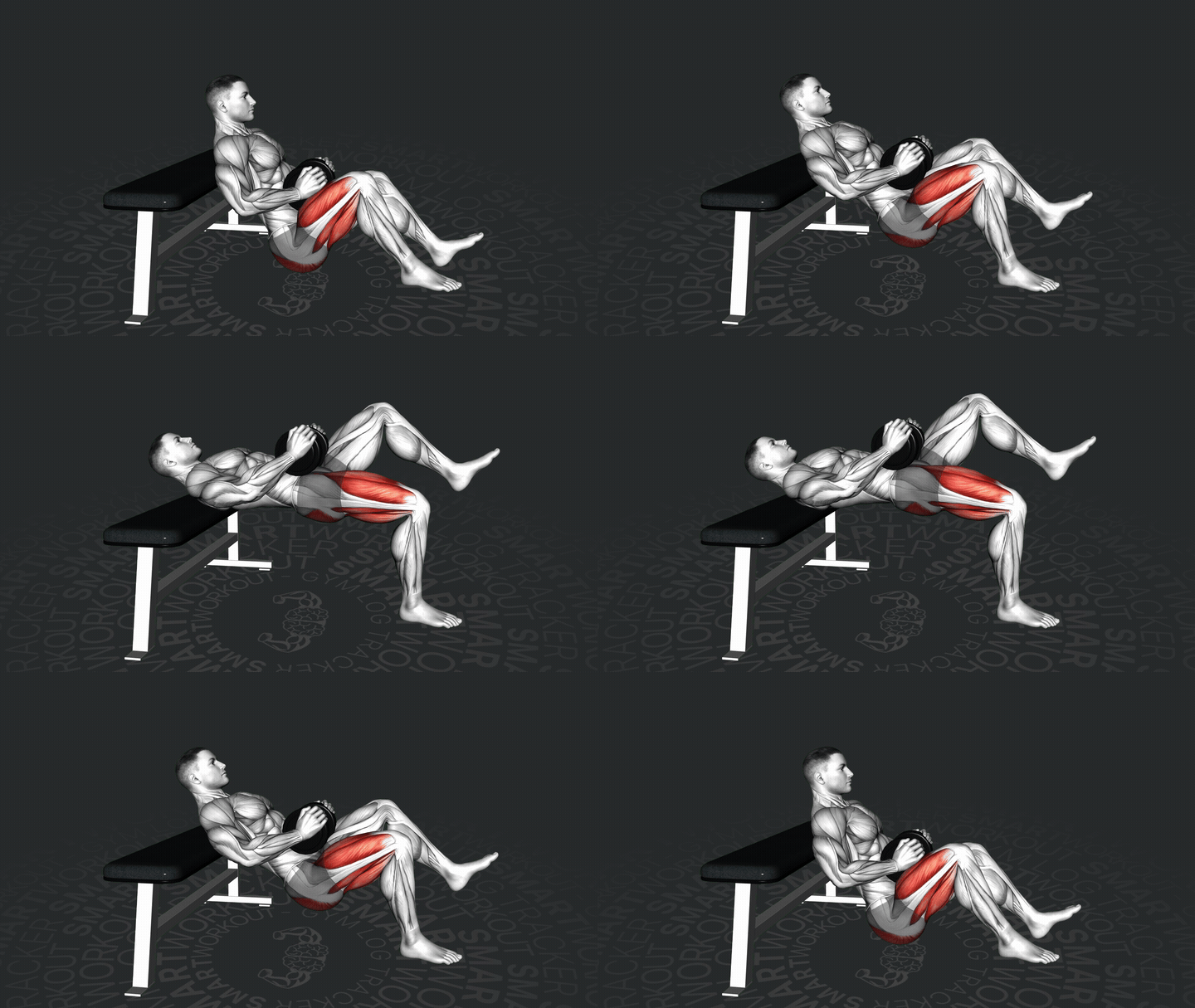
The Hip Thrust Smith Machine exercise targets the gluteal muscles, particularly the gluteus maximus, and also engages the hamstrings and core. This exercise is performed using a Smith machine to provide stability and control, allowing for a focused contraction of the glutes.
exercise_detail.how_to_perform
- Position a bench perpendicular to the Smith machine. Sit on the ground with your upper back against the bench.
- Roll the bar of the Smith machine to rest above your hips. Use a pad or towel for comfort if needed.
- Plant your feet flat on the floor, shoulder-width apart, with knees bent at approximately 90 degrees.
- Engage your core and drive through your heels to lift your hips upward, extending them fully while keeping your upper back in contact with the bench.
- Squeeze your glutes at the top of the movement, ensuring your body forms a straight line from shoulders to knees.
- Slowly lower your hips back down to the starting position without touching the ground.
- Repeat for the desired number of repetitions.
exercise_detail.what_muscles_work
exercise_detail.primary_muscle:
exercise_detail.secondary_muscles:
exercise_detail.tips
- Ensure that your feet are positioned correctly to maintain balance and maximize glute activation.
- Keep your chin tucked slightly to maintain a neutral spine throughout the movement.
- Focus on squeezing your glutes at the top of each repetition for maximum engagement.
- Avoid arching your lower back; maintain a strong core to stabilize your torso.
- Control the descent of the bar to prevent it from dropping too quickly, which can reduce effectiveness and increase injury risk.
exercise_detail.common_mistakes
- Placing the feet too far forward or too close to the body, leading to improper hip extension.
- Allowing the knees to cave inward instead of maintaining alignment with the toes.
- Using the lower back to lift the weight instead of engaging the glutes and hamstrings.
- Failing to maintain a neutral spine, leading to excessive arching or rounding of the back.
- Not achieving full hip extension at the top of the movement.
- Bouncing the weight off the ground instead of controlling the descent.
- Positioning the bar too high or too low on the hips, causing discomfort or instability.
- Rushing through the movement without pausing at the top to engage the glutes fully.
- Neglecting to keep the chin tucked, leading to neck strain.
exercise_detail.recommended_exercises
exercise_detail.recommended_exercises_intro
exercise_detail.app_ad.title
exercise_detail.app_ad.description