Crossack Squat
enums.exercise_tag.MOBILITYenums.exercise_tag.BALANCEenums.exercise_tag.FUNCTIONAL
exercise_detail.body_part: enums.body_part.LEGS
exercise_detail.description
The Cossack Squat is a lower body exercise that targets the muscles of the legs, particularly the quadriceps, hamstrings, glutes, and adductors. It also enhances flexibility, balance, and mobility in the hips and ankles. This exercise involves a lateral movement pattern, which helps in developing strength and stability in the lower body.
exercise_detail.how_to_perform
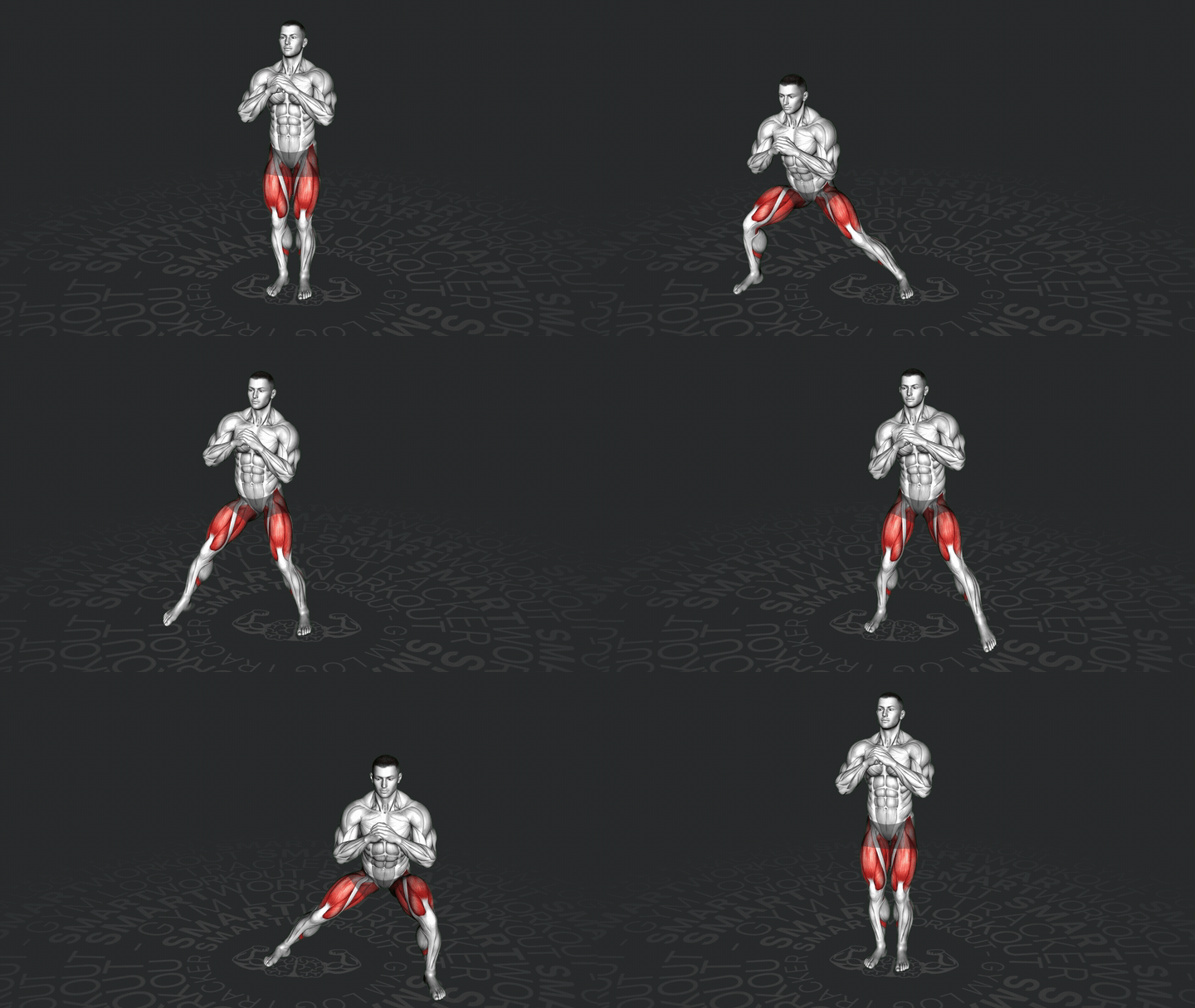
- Stand with your feet wider than shoulder-width apart and toes slightly pointed out.
- Shift your weight onto your right leg, bending your right knee while keeping your left leg straight.
- Lower your hips down towards the right heel, keeping your chest up and back straight.
- Ensure your right knee tracks over your right foot and does not extend past your toes.
- Keep your left foot flat on the ground or allow the toes to point upwards as you descend.
- Pause at the bottom of the movement, then push through your right heel to return to the starting position.
- Repeat on the left side by shifting your weight onto your left leg.
exercise_detail.what_muscles_work
exercise_detail.primary_muscle:
exercise_detail.secondary_muscles:
exercise_detail.tips
- Maintain a tall posture throughout the movement to protect your lower back.
- Focus on keeping your core engaged to enhance stability.
- Start with a wider stance if you find it difficult to balance initially.
- Use a support like a bench or a wall if you need assistance with balance.
- Perform the exercise slowly and with control to maximize muscle engagement and reduce injury risk.
- Inhale as you lower down into the squat and exhale as you push back up to enhance breathing efficiency.
exercise_detail.common_mistakes
- Leaning too far forward, causing imbalance and reducing effectiveness.
- Allowing the heel of the bent leg to lift off the ground, reducing stability.
- Failing to keep the chest up, leading to poor posture and engagement.
- Not pushing the hips back sufficiently, limiting range of motion.
- Twisting the torso instead of keeping it aligned with the hips.
- Dropping the knee of the bent leg inward, increasing injury risk.
- Neglecting to engage the core, resulting in decreased control.
- Rushing the movement, sacrificing form for speed.
- Not fully extending the straight leg, reducing stretch and activation.
- Allowing the foot of the straight leg to rotate outward, losing alignment.
exercise_detail.recommended_exercises
exercise_detail.recommended_exercises_intro
exercise_detail.app_ad.title
exercise_detail.app_ad.description