Jefferson Curl
StrengthMobilityStretching
Track this exercise in SmartWorkout
Log sets, weights and progress for free, with no workout limits.


Body Part: Legs
Description
The Jefferson Curl is a mobility and flexibility exercise targeting the posterior chain, particularly the hamstrings, lower back, and spinal erectors. It involves a controlled, weighted spinal flexion from a standing position, promoting spinal articulation and flexibility.
How to Perform
- Begin by standing on an elevated surface with feet hip-width apart, holding a light barbell or dumbbell with both hands.
- Keep your arms straight and let the weight hang in front of you.
- Slowly tuck your chin to your chest and begin to roll down through your spine, vertebra by vertebra.
- Allow your upper back to round as you continue to lower the weight towards the floor.
- Keep your knees slightly bent and focus on maintaining control throughout the movement.
- Once you reach your maximum comfortable range of motion, pause briefly.
- Reverse the movement by slowly rolling up through your spine, vertebra by vertebra, until you return to the starting position.
What Muscles Work
Primary Muscle:
Secondary Muscles:
Tips
- Start with a very light weight to ensure proper form and control.
- Focus on moving slowly and deliberately to maximize spinal articulation.
- Maintain a slight bend in the knees to reduce strain on the lower back.
- Engage your core throughout the movement for stability.
- Breathe steadily; exhale as you roll down and inhale as you roll up.
- Avoid forcing the range of motion; only go as far as is comfortable.
Common Mistakes
- Rounding the lower back excessively instead of maintaining a controlled curve throughout the spine.
- Bending the knees too much, reducing the stretch on the posterior chain.
- Not engaging the core, leading to a lack of stability and control.
- Allowing the shoulders to slump forward instead of keeping them retracted.
- Using too much weight, compromising form and increasing injury risk.
- Moving too quickly, which limits the effectiveness of the stretch and control.
- Not maintaining a neutral neck position, causing strain on the cervical spine.
- Failing to hinge at the hips, reducing the stretch on the hamstrings and lower back.
- Not descending fully, limiting the range of motion and stretch benefits.
Recommended Exercises
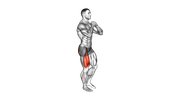
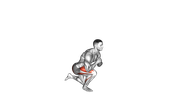
Explore exercises related to Jefferson Curl for legs training and similar movement patterns.
Choose a workout plan or create your own - for free
Ready-made plans for every goal, a free plan creator, hundreds of exercises and an advanced workout journal - all in SmartWorkout.


Start with a free plan. Keep progressing with SmartWorkout.
- users
- 200k+
- exercises with technique guides
- 1,000+
- workouts on the free plan
- ∞