Bulgarian Bag Walking Lunges
enums.exercise_tag.STRENGTHenums.exercise_tag.BALANCEenums.exercise_tag.FUNCTIONAL
exercise_detail.body_part: enums.body_part.LEGS
exercise_detail.description
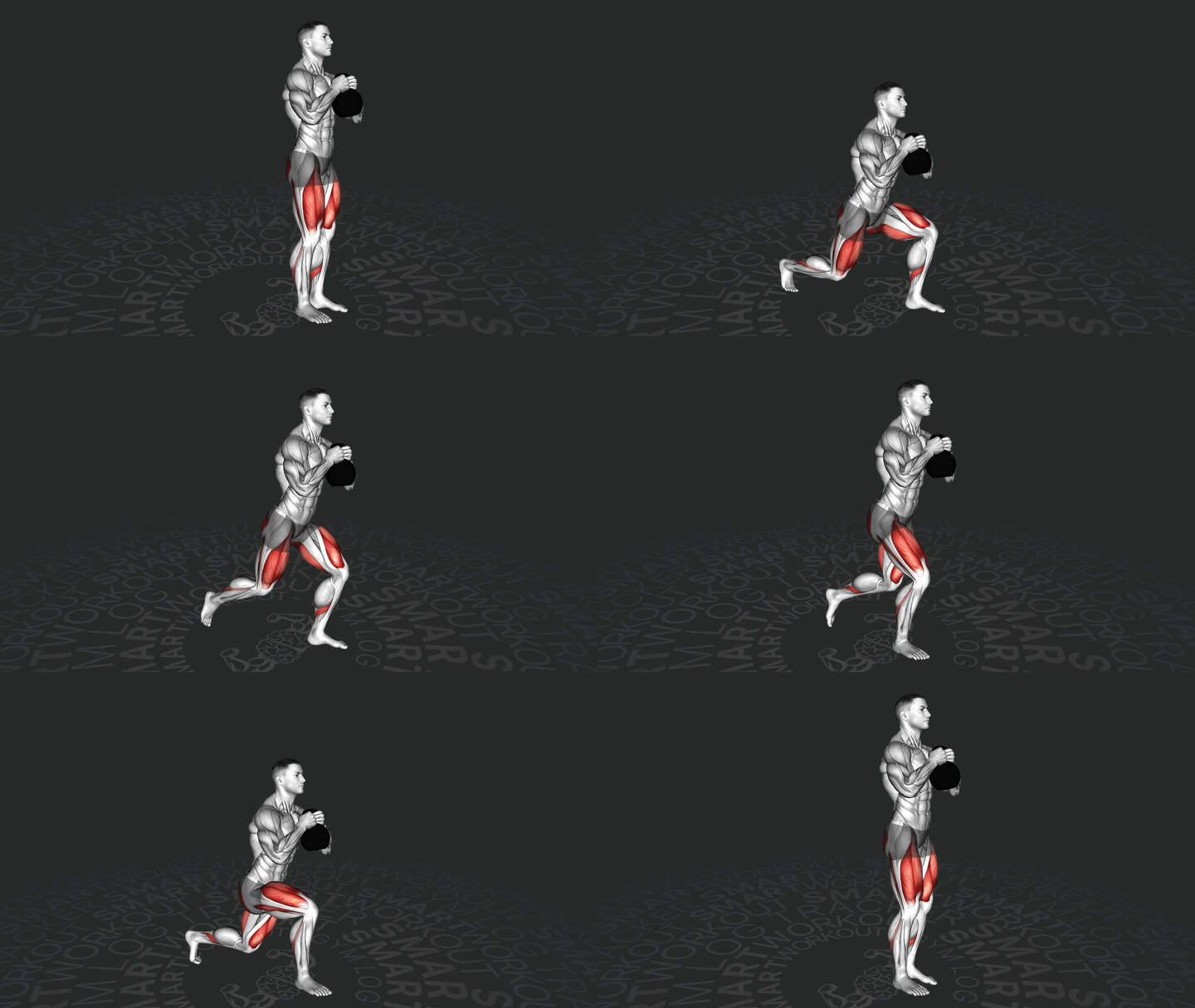
Bulgarian Bag Walking Lunges are a dynamic lower body exercise that targets the quadriceps, hamstrings, glutes, and core. This exercise involves performing lunges while carrying a Bulgarian Bag, adding resistance and challenging balance and coordination.
exercise_detail.how_to_perform
- Stand upright with feet hip-width apart, holding the Bulgarian Bag securely over your shoulders.
- Step forward with your right foot, lowering your hips until both knees are bent at approximately 90 degrees.
- Ensure your front knee is directly above your ankle and your back knee is hovering just above the ground.
- Push through the heel of your front foot to rise and bring your back foot forward to step into the next lunge.
- Continue alternating legs, maintaining an upright torso and steady pace.
- Complete the desired number of repetitions or distance.
exercise_detail.what_muscles_work
exercise_detail.primary_muscle:
exercise_detail.secondary_muscles:
exercise_detail.tips
- Keep your core engaged throughout the movement to maintain balance.
- Focus on a smooth, controlled motion rather than speed.
- Ensure your front knee does not extend past your toes to protect your joints.
- Use a weight that challenges you but allows you to maintain proper form.
- Breathe steadily, inhaling as you lower and exhaling as you push back up.
- Start with a lighter bag if you're new to this exercise to master the form.
exercise_detail.common_mistakes
- Allowing the knee to cave inward during the lunge, which can strain the knee joint.
- Leaning the torso too far forward, reducing engagement of the glutes and core.
- Taking steps that are too short, limiting the range of motion and effectiveness.
- Failing to keep the front knee aligned over the ankle, increasing stress on the knee.
- Not maintaining a stable grip on the Bulgarian Bag, leading to poor upper body control.
- Rising onto the toes of the front foot, which can destabilize the movement.
- Letting the back knee touch the ground, reducing control and increasing impact risk.
- Neglecting to engage the core, leading to a loss of balance and stability.
- Using momentum to move forward rather than controlled muscle engagement.
- Allowing the shoulders to round forward, which can lead to poor posture.
exercise_detail.recommended_exercises
exercise_detail.recommended_exercises_intro
exercise_detail.app_ad.title
exercise_detail.app_ad.description