Machine Reverse Hack Squat
Also known as: Reverse Hack Squat, Backwards Hack Squat
Track this exercise in SmartWorkout
Log sets, weights and progress for free, with no workout limits.


Description
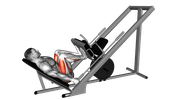
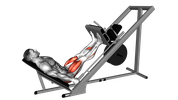
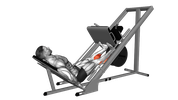
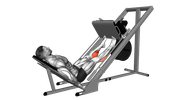
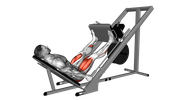
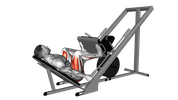
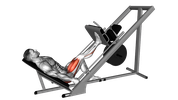
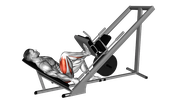
Face the hack squat machine with your chest on the pad and squat by sitting your hips back: a supported machine squat for your quads and glutes. Your quads still do most of the work, but your torso leans forward and your hips travel further back than in the standard Machine Hack Squat (back on the pad), so your glutes get more of the load. The pad holds your torso in place; the weight still sits on your shoulders. It's the one to choose when you want to squat heavy with no bar to balance.
How to Perform
- Load the plates evenly on the carriage while it rests on the stops.
- Step onto the footplate facing the machine and press your chest and stomach into the pad, with the shoulder pads resting on top of your shoulders.
- Set your feet flat, hip- to shoulder-width apart with the toes turned slightly out, a little behind your hips so your body leans into the pad.
- Hold the handles at the front of the shoulder pads, elbows pointing down. Your hands only pin you under the pads; they don't pull.
- Stand up to lift the carriage off the stops, then release the safety lever. Take a breath and brace your stomach.
- Over about 2 seconds, sit your hips back and down along the rails while your knees travel forward over your toes. Your chest stays on the pad.
- Go down until your thighs are about parallel to the footplate, or a little lower if your lower back stays flat and your heels stay down.
- Without bouncing, push the footplate away through your whole foot so your hips and shoulders rise together. Squeeze your glutes and stop just short of locking your knees.
- At the top of the final rep, re-engage the safety lever before you let the carriage down onto it.
What Muscles Work
Primary Muscle:
Secondary Muscles:
Tips
- Use 6–10 reps for strength and 8–15 for muscle; a last set can go to 20 because the carriage is easy to rack. Hit the top of your range on every set at the same depth first, then add 10 kg (5 kg per side) and drop back to the bottom of the range. Switch to 5 kg jumps when progress slows, and log the plates the same way every time, since the empty carriage weighs something different on every machine.
- Glutes and the front of your thighs do the work, with a strong glute stretch at the bottom. Your lower back only holds position. If it tires first, your chest is leaving the pad or you're going deeper than your hips allow. Pain at the front of the knee? Check that your knees follow your toes and your heels stay down.
- Easier: the Leg Press, or this machine with the empty carriage and a shorter range, down to about 90 degrees at the knee. Harder without more plates: a 2-second pause at the bottom or a 3-second lowering.
- Substitutes: Machine Hack Squat (back on the pad, more upright, more quads), Machine Belt Squat (no load on your shoulders), Leg Press, Dumbbell Goblet Squat (no machine needed).
Common Mistakes
- Hips shooting up first out of the bottom while your chest peels off the pad. The rep turns into a good morning; keep your chest pressed in, push the footplate away so hips and shoulders rise together, and take weight off until they do.
- Lower back rounding at the bottom as your pelvis tucks under. Stop the descent just before that point and brace before each rep. A slightly wider stance with the toes out can buy you some depth.
- Heels lifting as your knees travel forward. Set your feet a little further back from the machine and keep pressure through the whole foot; the depth should come from your hips moving back, not only from your knees.
- Knees caving in on the way up. Push them out in line with your second and third toes, and drop the load if they still drift.
- Depth shrinking as the plates go up. Pick one depth, such as thighs parallel to the footplate, and hit it on every rep so the progress you log is real.
Recommended Exercises
Explore exercises related to Machine Reverse Hack Squat for legs training and similar movement patterns.
Choose a workout plan or create your own - for free
Ready-made plans for every goal, a free plan creator, hundreds of exercises and an advanced workout journal - all in SmartWorkout.


Start with a free plan. Keep progressing with SmartWorkout.
- users
- 200k+
- exercises with technique guides
- 1,000+
- workouts on the free plan
- ∞