Smith Squat
Track Smith Squat in SmartWorkout and watch your numbers go up
Log sets, weights and progress for free, with no workout limits.


Description
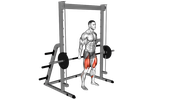
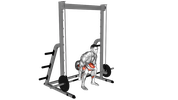
The Smith Machine Squat is a compound exercise targeting the quadriceps, hamstrings, glutes, and calves. It involves performing a squat using a Smith machine, which provides a guided barbell path for added stability and control. This exercise is beneficial for beginners learning squat mechanics and for experienced lifters focusing on form and muscle isolation.
How to Perform
- Position the bar of the Smith machine at shoulder height.
- Stand under the bar with your feet shoulder-width apart.
- Place the bar across your upper back and shoulders, gripping it with both hands slightly wider than shoulder-width.
- Unrack the bar by rotating it forward and step back slightly to clear the safety stops.
- Keep your chest up, core engaged, and back straight throughout the movement.
- Lower your body by bending your knees and hips, keeping your knees aligned with your toes.
- Descend until your thighs are parallel to the floor or slightly below.
- Push through your heels to return to the starting position, extending your knees and hips.
What Muscles Work
Primary Muscle:
Secondary Muscles:
Tips
- Ensure the bar is evenly loaded before starting the exercise.
- Maintain a neutral spine to avoid lower back strain.
- Adjust the safety stops to an appropriate height for added security.
- Focus on controlled movements both during descent and ascent.
- Keep your weight centered over your midfoot to maintain balance.
- Avoid locking out your knees at the top of the movement to keep tension on the muscles.
- Breathe in as you lower down and exhale as you push back up.
Common Mistakes
- Placing feet too far forward, leading to excessive forward lean and knee strain.
- Setting the bar too high on the back, causing neck and upper back discomfort.
- Allowing knees to cave inward during the squat, increasing knee joint stress.
- Not reaching sufficient depth, limiting glute and hamstring engagement.
- Using an uneven grip on the bar, resulting in imbalanced load distribution.
- Failing to maintain a neutral spine, increasing the risk of lower back strain.
- Relying on the bar for balance instead of engaging core muscles.
- Bouncing at the bottom of the squat, reducing control and increasing injury risk.
- Locking out knees at the top, which can lead to joint stress.
Recommended Exercises
Explore exercises related to Smith Squat for legs training and similar movement patterns.
Choose a workout plan or create your own - for free
Ready-made plans for every goal, a free plan creator, hundreds of exercises and an advanced workout journal - all in SmartWorkout.


Start with a free plan. Keep progressing with SmartWorkout.
- users
- 200k+
- exercises with technique guides
- 1,000+
- workouts on the free plan
- ∞