Plyo side lunge
enums.exercise_tag.PLYOMETRICenums.exercise_tag.BALANCEenums.exercise_tag.FUNCTIONALenums.exercise_tag.EXPLOSIVE
exercise_detail.body_part: enums.body_part.LEGS
exercise_detail.description
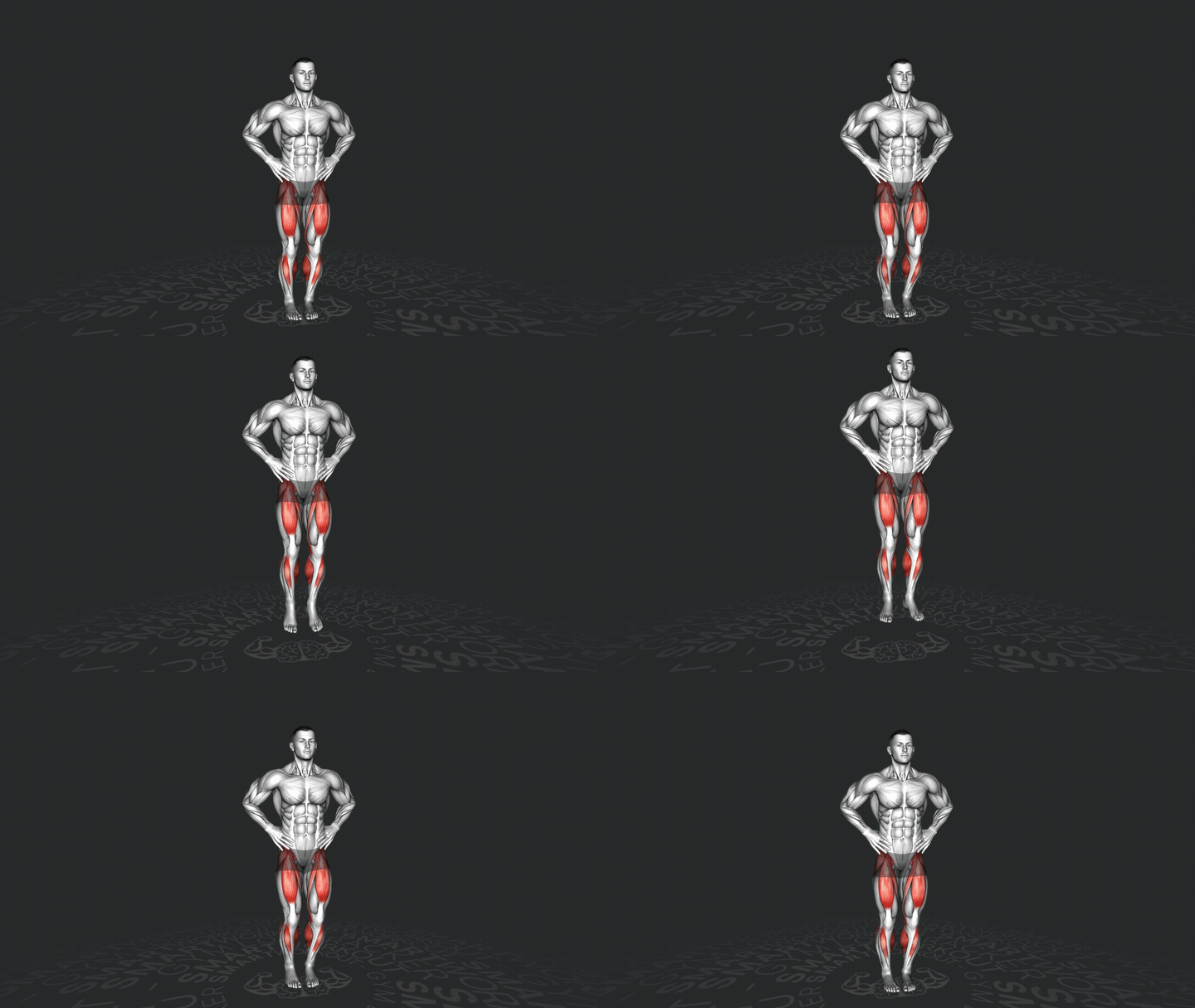
The Plyo Side Lunge is a dynamic exercise that combines lateral lunges with a plyometric jump, targeting the glutes, quadriceps, hamstrings, and inner thighs. It enhances lower body strength, agility, and balance while providing a cardiovascular challenge.
exercise_detail.how_to_perform
- Start by standing with your feet hip-width apart and your arms at your sides.
- Engage your core and take a large step to the right, bending your right knee and pushing your hips back into a side lunge position. Keep your left leg straight.
- As you lower into the lunge, ensure your right knee is aligned with your right foot and does not extend past your toes.
- Push off explosively with your right foot to jump back to the starting position.
- Immediately step out to the left side and repeat the movement on the opposite leg.
- Continue alternating sides for the desired number of repetitions.
exercise_detail.what_muscles_work
exercise_detail.primary_muscle:
exercise_detail.secondary_muscles:
exercise_detail.tips
- Maintain a tight core throughout the exercise to support balance and control.
- Focus on landing softly on each jump to reduce impact on the joints.
- Ensure that your knee does not extend beyond your toes during the lunge to protect your joints.
- Keep your chest up and shoulders back to maintain proper posture.
- Start with a smaller range of motion if you're new to this exercise, gradually increasing as you gain strength and confidence.
- Use a mirror or ask for feedback to ensure proper form and alignment.
exercise_detail.common_mistakes
- Landing with locked knees instead of soft knees, increasing joint stress.
- Failing to push hips back, leading to excessive knee strain.
- Not maintaining a straight back, causing potential lower back discomfort.
- Allowing the knee to cave inward, risking knee injury.
- Neglecting to engage core muscles, reducing stability.
- Jumping too high, losing control and balance.
- Not fully extending the lunging leg, limiting range of motion.
- Landing on toes instead of the whole foot, decreasing stability.
- Rushing the movement, compromising form and effectiveness.
- Uneven weight distribution, leading to muscle imbalance.
exercise_detail.recommended_exercises
exercise_detail.recommended_exercises_intro


exercise_detail.app_ad.title
exercise_detail.app_ad.description