Standing Incline Band Chest Fly
Track Standing Incline Band Chest Fly in SmartWorkout and watch your numbers go up
Log sets, weights and progress for free, with no workout limits.


Description
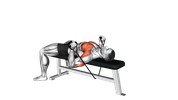
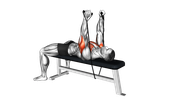
The Standing Incline Band Chest Fly is an exercise targeting the pectoral muscles, specifically the upper chest. It involves using resistance bands to simulate the motion of a fly on an incline bench, promoting muscle hypertrophy and strength in the chest area. This exercise also engages the shoulders and triceps as secondary muscles.
How to Perform
- Anchor the resistance band at a low point behind you, such as a door anchor or sturdy post.
- Stand with feet shoulder-width apart, facing away from the anchor point.
- Hold the handles of the band with palms facing forward, arms extended slightly below shoulder height.
- Step forward to create tension in the band, keeping a slight bend in your elbows.
- Engage your core and maintain a slight forward lean from your hips.
- Bring your hands together in front of you in a wide arc, squeezing your chest at the peak of the movement.
- Slowly return to the starting position, controlling the tension in the band.
- Repeat for the desired number of repetitions.
What Muscles Work
Primary Muscle:
Tips
- Ensure that your core is engaged throughout the exercise to maintain stability.
- Keep a slight bend in your elbows to reduce strain on your joints.
- Focus on squeezing your chest muscles as you bring your hands together.
- Control the movement on both the concentric and eccentric phases for maximum effectiveness.
- Adjust your stance or band tension if you feel discomfort or lack of resistance.
- Maintain a neutral spine and avoid arching your back during the exercise.
Common Mistakes
- Allowing the elbows to drop too low, reducing chest engagement.
- Leaning too far forward, shifting focus away from the chest to the shoulders.
- Failing to maintain a slight bend in the elbows, leading to joint strain.
- Using momentum to bring the bands together, compromising muscle control.
- Not keeping the core engaged, resulting in an unstable stance.
- Pulling the bands too far back, causing excessive shoulder strain.
- Allowing the wrists to bend, reducing tension on the chest muscles.
- Standing too close or too far from the anchor point, affecting tension consistency.
- Neglecting to retract the shoulder blades, leading to poor posture and reduced effectiveness.
Recommended Exercises
Explore exercises related to Standing Incline Band Chest Fly for chest training and similar movement patterns.














Choose a workout plan or create your own for free
Ready-made plans for every goal, a free plan creator, hundreds of exercises and an advanced workout journal: all in SmartWorkout.
Start with a free plan. Keep progressing with SmartWorkout.
- users
- 200k+
- exercises with technique guides
- 1,000+
- workouts on the free plan
- ∞