Landmine Squat
StrengthFunctional
Track this exercise in SmartWorkout
Log sets, weights and progress for free, with no workout limits.


Body Part: Legs
Description
The Landmine Squat is a compound exercise that targets the quadriceps, glutes, and core. It involves using a landmine attachment, which is a barbell anchored at one end, allowing for a unique range of motion. This exercise is beneficial for building lower body strength and improving balance and coordination.
How to Perform
- Position the barbell in the landmine attachment, ensuring it is securely anchored.
- Stand facing the barbell with your feet shoulder-width apart.
- Grip the end of the barbell with both hands, holding it close to your chest.
- Engage your core and keep your chest up as you begin to lower into a squat by bending your knees and pushing your hips back.
- Descend until your thighs are parallel to the ground or as low as your mobility allows.
- Drive through your heels to return to the starting position, extending your hips and knees fully.
- Repeat for the desired number of repetitions.
What Muscles Work
Primary Muscle:
Secondary Muscles:
Tips
- Maintain a neutral spine throughout the movement to avoid unnecessary strain on your back.
- Keep your weight distributed evenly across your feet to ensure stability.
- Focus on engaging your core muscles to support your lower back during the squat.
- Ensure that your knees track over your toes as you descend to prevent knee injuries.
- Control the movement both on the way down and up to maximize muscle engagement.
- Adjust your stance width if necessary to find a comfortable position that allows for optimal squat depth.
Common Mistakes
- Feet positioned too close together, limiting stability and range of motion.
- Barbell held too far from the chest, reducing control and increasing lower back strain.
- Knees caving inward during the squat, leading to poor alignment and potential joint stress.
- Heels lifting off the ground, reducing stability and shifting weight forward.
- Back rounding at the bottom of the squat, risking spinal alignment issues.
- Failing to engage the core, leading to poor posture and balance.
- Descending too quickly, compromising control and increasing risk of injury.
- Not squatting to a sufficient depth, limiting muscle engagement and effectiveness.
- Allowing the elbows to flare out, reducing upper body stability.
Recommended Exercises
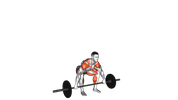
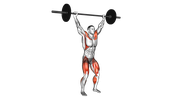
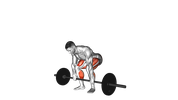
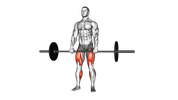
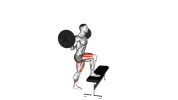
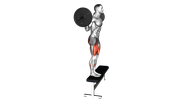
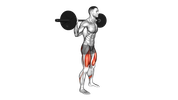
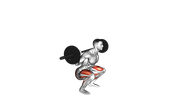
Explore exercises related to Landmine Squat for legs training and similar movement patterns.
Choose a workout plan or create your own - for free
Ready-made plans for every goal, a free plan creator, hundreds of exercises and an advanced workout journal - all in SmartWorkout.


Start with a free plan. Keep progressing with SmartWorkout.
- users
- 200k+
- exercises with technique guides
- 1,000+
- workouts on the free plan
- ∞