Stabillity Ball Wall Squat
StrengthBalanceFunctionalRehabilitation
Track Stabillity Ball Wall Squat in SmartWorkout and watch your numbers go up
Log sets, weights and progress for free, with no workout limits.


Body Part: Legs
Description
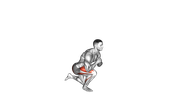
The Stability Ball Wall Squat is an exercise that targets the quadriceps, hamstrings, glutes, and core muscles. It involves using a stability ball placed between your lower back and a wall to perform a squat with added support and balance challenge.
How to Perform
- Stand with your feet shoulder-width apart, positioning a stability ball between your lower back and a wall.
- Lean back slightly against the ball, ensuring it is secure and stable.
- Engage your core muscles and keep your chest up.
- Slowly bend your knees and lower your body into a squat position, keeping your knees aligned with your toes.
- Descend until your thighs are parallel to the ground or as low as comfortable without losing form.
- Pause briefly at the bottom of the squat.
- Push through your heels to return to the starting position, keeping the movement controlled.
- Repeat for the desired number of repetitions.
What Muscles Work
Primary Muscle:
Secondary Muscles:
Tips
- Ensure the stability ball is properly inflated for optimal support.
- Keep your weight distributed evenly through your heels to maintain balance.
- Avoid letting your knees extend past your toes during the squat to protect your joints.
- Maintain a neutral spine throughout the movement to prevent strain on your back.
- Focus on engaging your core muscles to enhance stability and control.
- Perform the exercise slowly to maximize muscle engagement and minimize risk of injury.
- Adjust foot placement if necessary to find a comfortable and stable position.
Common Mistakes
- Placing the stability ball too high or too low on the back, leading to improper support and balance.
- Allowing knees to extend beyond toes, increasing strain on the knee joints.
- Failing to maintain a straight line from head to tailbone, resulting in poor posture and reduced core engagement.
- Not keeping feet shoulder-width apart, compromising stability and effectiveness.
- Descending too quickly, reducing control and increasing the risk of losing balance.
- Rising too quickly, which can lead to momentum-based movement rather than muscle engagement.
- Not squatting deep enough to engage the glutes and quads effectively.
- Allowing heels to lift off the ground, reducing stability and increasing pressure on the balls of the feet.
- Arching the lower back excessively, which can lead to lower back strain.
- Failing to engage the core, resulting in less support for the spine and reduced overall effectiveness.
Recommended Exercises
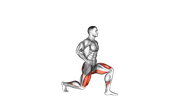
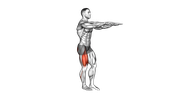
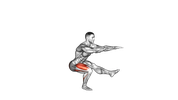
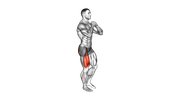
Explore exercises related to Stabillity Ball Wall Squat for legs training and similar movement patterns.







Choose a workout plan or create your own - for free
Ready-made plans for every goal, a free plan creator, hundreds of exercises and an advanced workout journal - all in SmartWorkout.


Start with a free plan. Keep progressing with SmartWorkout.
- users
- 200k+
- exercises with technique guides
- 1,000+
- workouts on the free plan
- ∞