Poliquin Step-Up
Track Poliquin Step-Up in SmartWorkout and watch your numbers go up
Log sets, weights and progress for free, with no workout limits.


Description
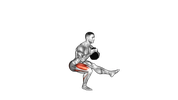
The Poliquin Step-Up is a lower body exercise that targets the quadriceps, glutes, and hamstrings. It is performed with a focus on controlled movement and balance, enhancing knee stability and strength. This exercise is named after Charles Poliquin, a renowned strength coach, and is particularly effective for athletes looking to improve their leg power and knee health.
How to Perform
- Stand facing a bench or step with your feet hip-width apart.
- Place one foot on the bench, ensuring your entire foot is flat and stable.
- Push through the heel of the foot on the bench to lift your body upward.
- Keep your torso upright and avoid leaning forward excessively.
- Bring the trailing leg up to tap the bench lightly without placing weight on it.
- Lower the trailing leg back to the ground in a controlled manner.
- Repeat for the desired number of repetitions before switching legs.
What Muscles Work
Primary Muscle:
Tips
- Ensure the bench or step is at a height where your knee is at or slightly below hip level when stepping up.
- Focus on pushing through the heel of the working leg to engage the glutes effectively.
- Maintain a neutral spine throughout the movement to prevent lower back strain.
- Control the descent to maximize muscle engagement and prevent injury.
- Start with body weight and progress to holding dumbbells as you become more comfortable with the exercise.
- Keep your core engaged to aid in balance and stability during the movement.
Common Mistakes
- Allowing the knee to collapse inward, leading to poor alignment and reduced effectiveness.
- Pushing off with the back leg instead of using the lead leg to drive the movement.
- Failing to maintain a neutral spine, resulting in unnecessary strain on the lower back.
- Using momentum to swing the body up rather than controlled muscle engagement.
- Not keeping the heel of the lead foot flat on the step, which can reduce stability and effectiveness.
- Leaning too far forward, which shifts the focus away from the target muscles.
- Not fully extending the lead leg at the top of the movement, limiting range of motion.
- Allowing the toes of the lead foot to point outward, affecting knee alignment and muscle activation.
Recommended Exercises
Explore exercises related to Poliquin Step-Up for legs training and similar movement patterns.







Choose a workout plan or create your own - for free
Ready-made plans for every goal, a free plan creator, hundreds of exercises and an advanced workout journal - all in SmartWorkout.


Start with a free plan. Keep progressing with SmartWorkout.
- users
- 200k+
- exercises with technique guides
- 1,000+
- workouts on the free plan
- ∞