Single Leg Hip Thrust
Also known as: Bodyweight Single-Leg Hip Thrust
StrengthBalanceFunctional
Track this exercise in SmartWorkout
Log sets, weights and progress for free, with no workout limits.


Description
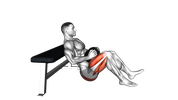
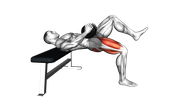
The Single Leg Hip Thrust is a bodyweight lower body exercise that primarily targets the glutes, with secondary engagement of the hamstrings and core. This exercise is performed using a single leg to increase the intensity and focus on unilateral strength and stability.
How to Perform
- Sit on the ground with your upper back resting against a bench, knees bent, and feet flat on the floor.
- Rest your arms along the top of the bench for support.
- Lift one foot off the floor, keeping that knee bent and raised, while the other foot stays flat on the ground.
- Drive through the heel of the grounded foot to lift your hips towards the ceiling, squeezing your glutes at the top.
- Pause briefly at the top of the movement, ensuring your body forms a straight line from shoulders to knees.
- Lower your hips back down to the starting position in a controlled manner.
- Repeat for the desired number of repetitions before switching legs.
What Muscles Work
Primary Muscle:
Secondary Muscles:
Tips
- Ensure your upper back remains in contact with the bench throughout the movement for stability.
- Focus on squeezing your glutes at the top of each rep to maximize muscle activation.
- Keep your core engaged to maintain balance and prevent lower back strain.
- Perform the movement slowly and with control to enhance muscle engagement and reduce injury risk.
- Master the two-leg Hip Thrust before moving to the single-leg version.
Common Mistakes
- Placing the supporting foot too far from the bench, reducing glute engagement.
- Allowing the knee of the working leg to collapse inward, leading to improper alignment.
- Not keeping the core engaged, causing the lower back to hyperextend.
- Failing to keep the head and neck in a neutral position, leading to strain.
- Using momentum rather than controlled movement, reducing effectiveness.
- Dropping the hips too low at the bottom, losing tension in the glutes.
- Letting the hips drop or rotate on the side of the raised leg.
- Neglecting to fully extend the hip at the top of the movement, limiting range of motion.
- Allowing the non-working leg to move excessively, disrupting balance.
- Not keeping the bench at the correct height, affecting hip thrust mechanics.
Recommended Exercises
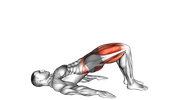
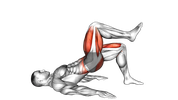
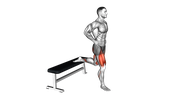
Explore exercises related to Single Leg Hip Thrust for glutes training and similar movement patterns.
Choose a workout plan or create your own for free
Ready-made plans for every goal, a free plan creator, hundreds of exercises and an advanced workout journal: all in SmartWorkout.