Freestanding Handstand
Also known as: Free Handstand
Track Freestanding Handstand in SmartWorkout and watch your numbers go up
Log sets, weights and progress for free, with no workout limits.


Description
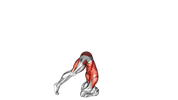
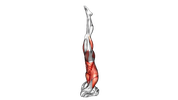
A balance on straight arms with no wall for support. From a forward fold with your palms on the floor, you lean onto your hands, tuck both legs up together and extend them into one vertical line, hold the balance, then lower back down. It builds shoulder and wrist strength, full-body tension and balance.
How to Perform
- Stand with your feet together, fold forward and place your palms flat on the floor shoulder-width apart, a little in front of your feet. Spread your fingers wide and point them forward.
- Straighten your arms and lean forward until your shoulders are over your hands and most of your weight rests on them.
- Bend your knees and lift both feet off the floor at the same time with a small hop. Pull your knees toward your chest until your hips are above your shoulders.
- Extend your legs straight up, keeping them together, until your body forms one vertical line from your hands to your toes.
- Push the floor away with locked elbows and lift your shoulders toward your ears. Squeeze your glutes and legs, point your toes and keep your ribs pulled in.
- Balance through your hands. If your legs tip past vertical, press your fingertips into the floor; if you start falling back the way you came up, shift the pressure to the heels of your hands.
- After the planned time, bend your knees, lower both feet to the floor together with control and return to the forward fold.
What Muscles Work
Primary Muscle:
Secondary Muscles:
Tips
- Learn the straight body line in a chest-to-wall handstand before you try it freestanding.
- Practice on a non-slip floor with open space around you. If you overbalance, turn one hand and step out sideways into a cartwheel instead of falling onto your back.
- Look at the floor between your hands so your head stays between your arms.
- Practice holding the tuck with your hips over your shoulders before you extend your legs. The shorter lever makes the balance point easier to find.
- Do several short attempts with full rest instead of one long struggle for balance.
- Breathe steadily during the hold. Holding your breath stiffens your body and makes your corrections jerky.
Common Mistakes
- Placing the hands too narrow, too wide or unevenly, which makes the balance harder to control
- Lifting the feet before the shoulders are over the hands, so the hips never get above the shoulders
- Hopping too hard, so the legs swing past vertical and you overbalance
- Bending the elbows or sinking into the shoulders instead of pushing the floor away
- Arching the lower back and flaring the ribs, which bends the body into a banana shape
- Piking at the hips, bending the knees or letting the legs drift apart during the hold
- Letting the feet crash to the floor instead of bending the knees and lowering them with control
Recommended Exercises
Explore exercises related to Freestanding Handstand for shoulders training and similar movement patterns.
Choose a workout plan or create your own for free
Ready-made plans for every goal, a free plan creator, hundreds of exercises and an advanced workout journal: all in SmartWorkout.
Start with a free plan. Keep progressing with SmartWorkout.
- users
- 200k+
- exercises with technique guides
- 1,000+
- workouts on the free plan
- ∞